

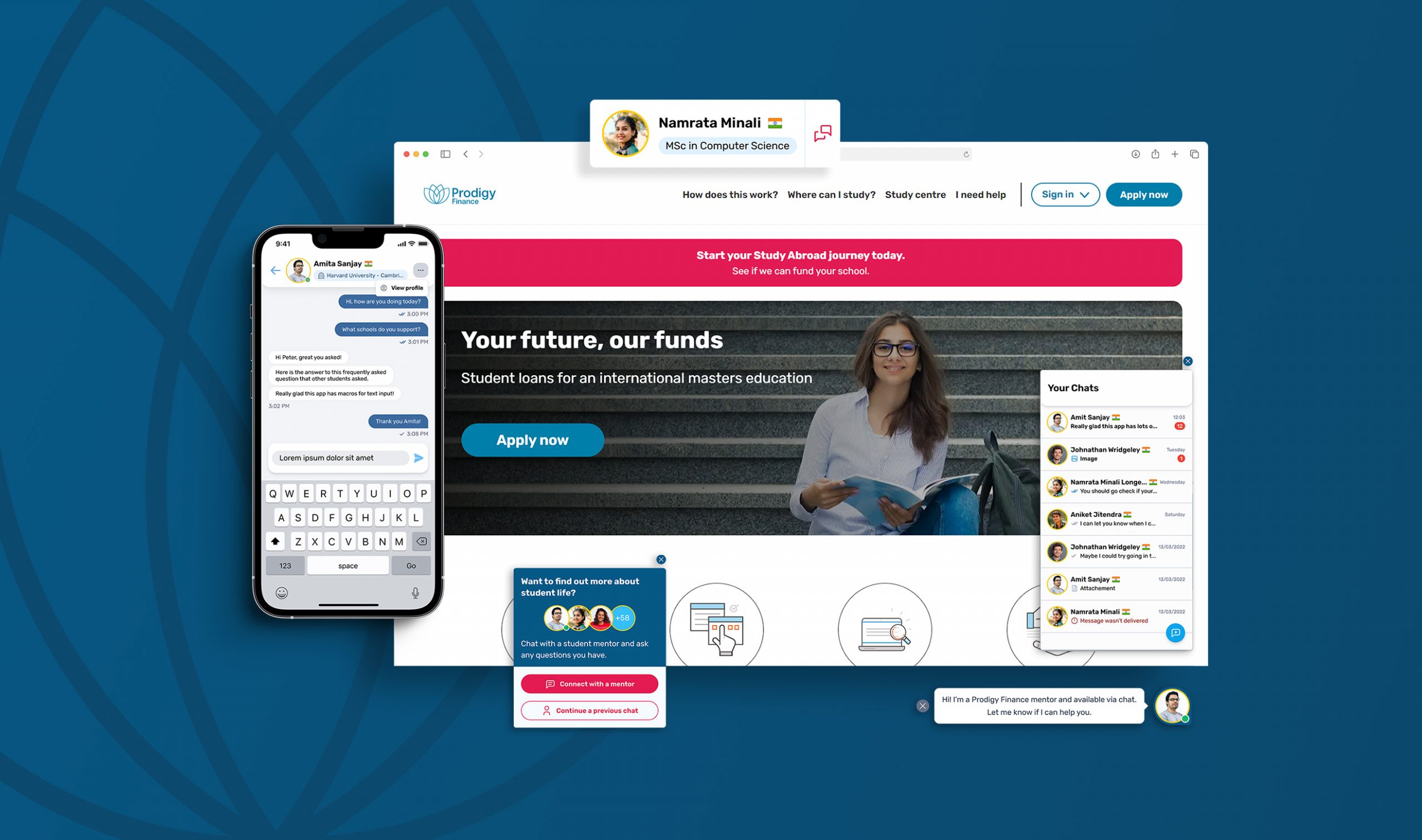



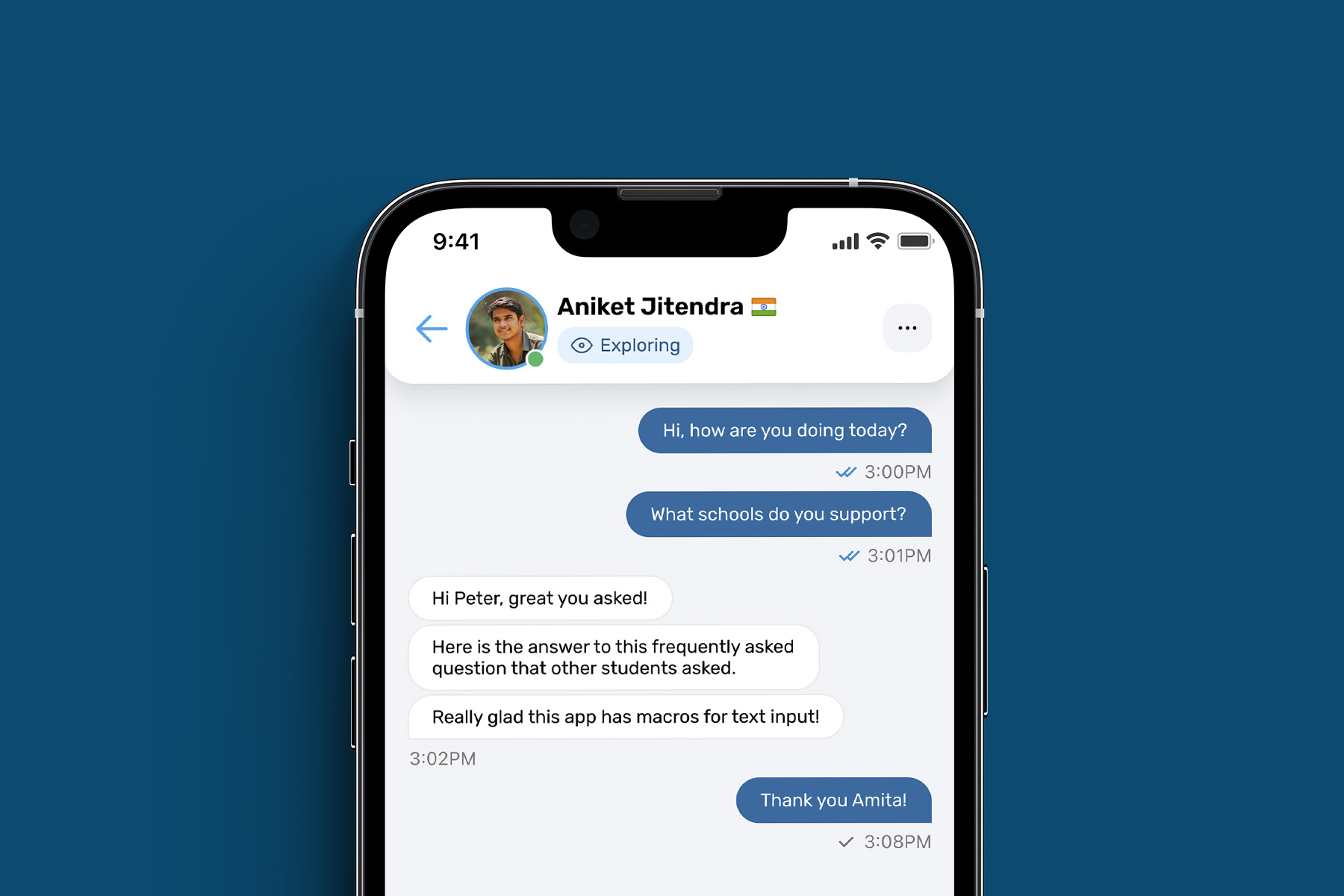
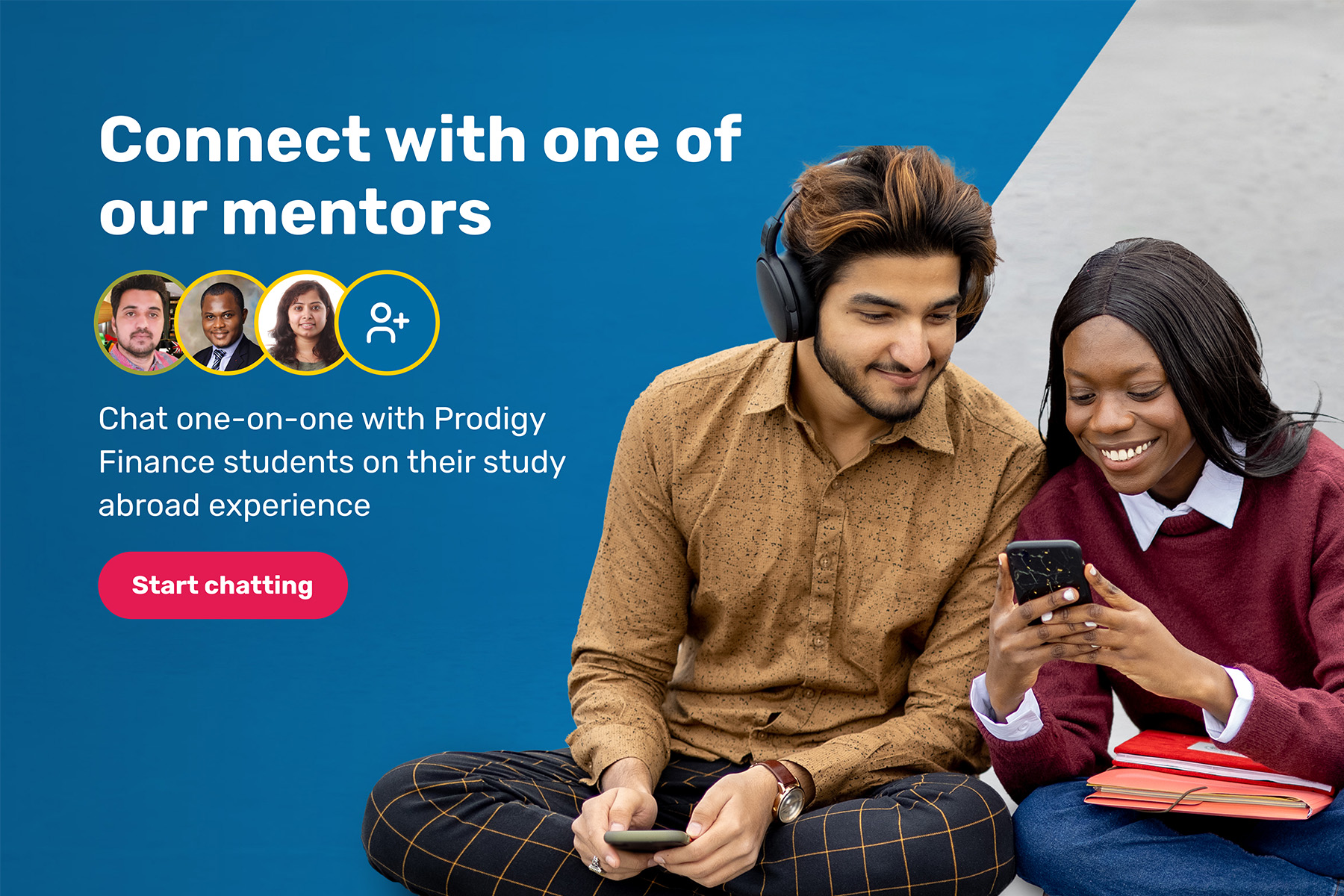
As the lead designer, I was responsible for overseeing the design and productization of Prodigy Finance’s existing community, and integrating it seamlessly into the existing repayment app and website experience. This collaborative effort involved extensive research, planning, and testing, as well as close collaboration with stakeholders and other members of the design team.
The result is a low-friction chat experience for incoming prospective students that aims to tackle key business problems, such as providing personalized support and building relationships with potential borrowers.
The project also involved updating and consolidating the design system, and transitioning the organization to Figma as the primary design tool.
These efforts have contributed to a more consistent and cohesive user experience, and have supported the growth and success of the community. Overall, the design and productization of the community has been a major achievement, and has helped to strengthen the community and improve the user experience.
Given the limited time available for designing and launching the MVP, the approach and planning of the design process were crucial in ensuring that business requirements were aligned with user needs and that progress was made efficiently and effectively.
The design process involved extensive research, collaboration with stakeholders, and iterative testing and refinement, to ensure that the final design met the needs of both users and the business. The design team also worked closely with the development team to ensure that the design was technically feasible and could be implemented smoothly and efficiently.
As a result, the MVP was successfully designed and launched on time, and has been well received by users and the business. Overall, the design process played a key role in the success of the MVP, and has helped to support the growth and success of the community.

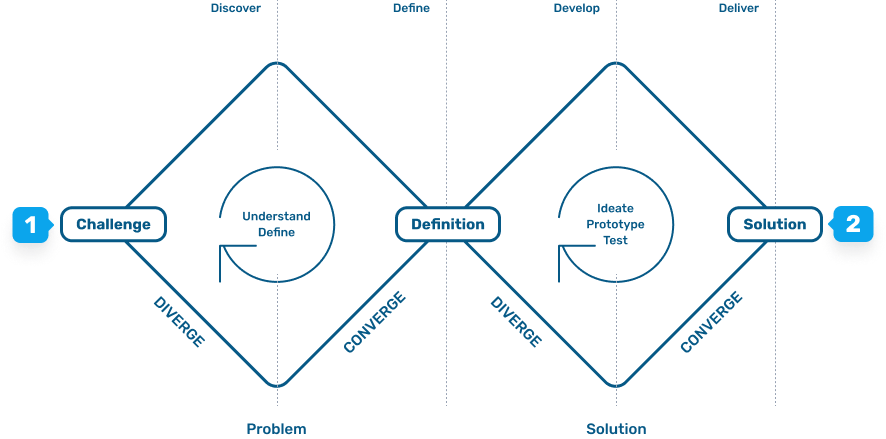
As part of the design process, I conducted research to identify customer challenges and used the Double Diamond framework to analyze the findings and develop product solutions. The resulting design solutions were tested and refined through iterative user testing and feedback.
The use of research and the Double Diamond framework played a key role in the success of the design process and ensured that the MVP was aligned with customer needs and business goals.

Key business problems we want to tackle as we develop this new product are:
- Viral acquisition issue – Surveys say 80% of our customers refer, but no mechanism to understand/amplify.
- Lack of engagement – No school or grace period customer contact, little in repayment and zero alumni
- Conversion – Down significantly from previous years – a key company focus in 2022
- Lack of Moat – Believed moat was reduced cost of funding due to size
- Ops Team Utilization – Common Explorer application questions took 2 full time agents

- Help me trust my lender – Students want to connect with a customer of their lender (qual/quant)
- Process – Gaining command on process of studying abroad (including local knowledge)
- Help me get information on my course/location – Currently cold messaging on LinkedIn (qual)
- Network for jobs – Get information and referrals for jobs post graduation (qual & guant)
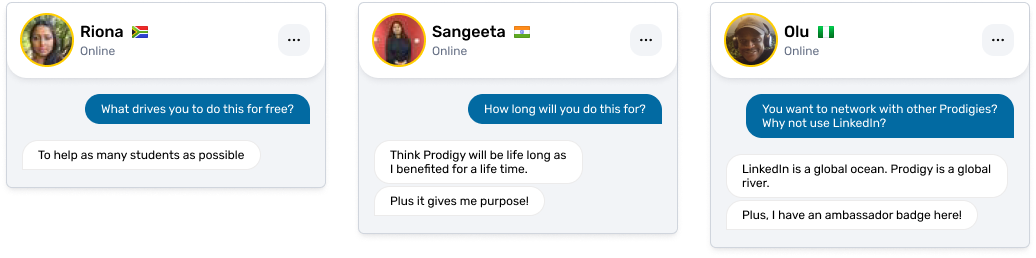
- Help me pass on my knowledge – A small but powerful group who are very grateful want help helping (qual/quant)

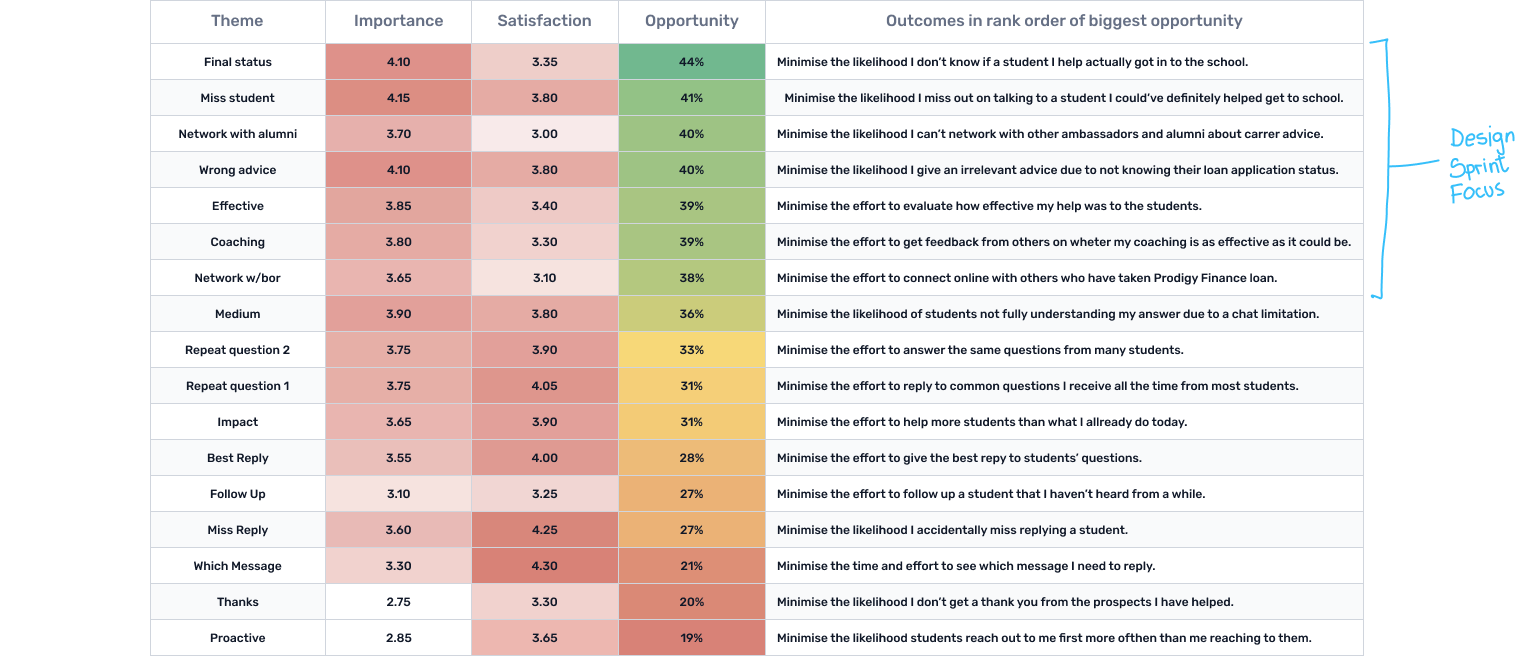
- Statuses – They are blind to who they are helping / funnel status especially knowing if they got to school
- Missed opportunity – Anxious they aren’t helping everyone they can and want applicant transparency
- Impact / learnings – They want feedback on their coaching to improve effectiveness and prevent bad advice
- Networking opportunities – Want to freely network with alumni for career advice/mentorship
As this underpins the product strategy, bellow I expand on the insights discovered in JTBD interviews and surveys.
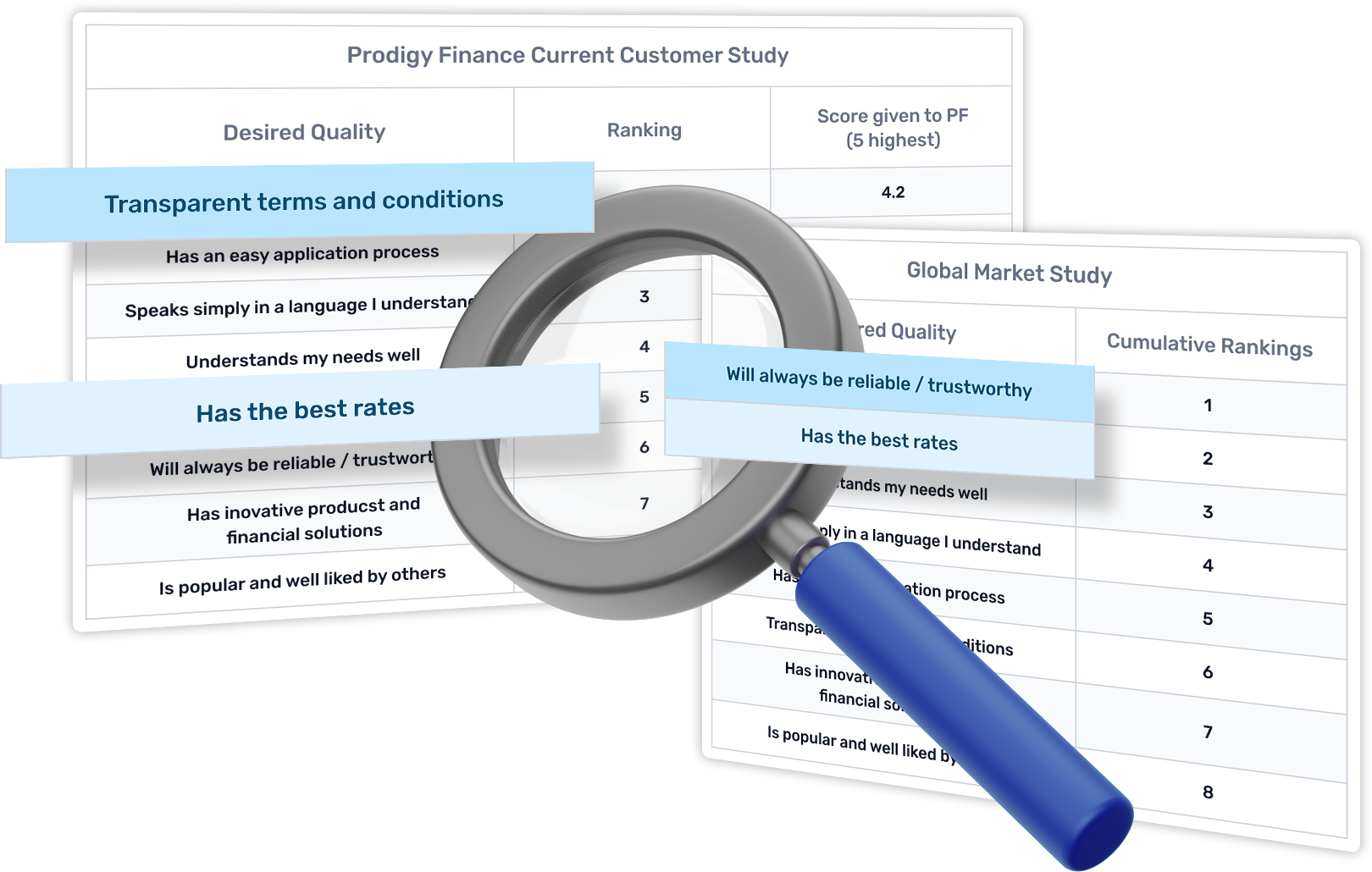
We ran a global brand survey and saw Trust coming in at #1 even above interest rates:
Qualities that ‘cost us nothing’ (reliability/trustworthiness, understanding customer needs, simple language) are cumulatively more important than ‘best rates’.
PF customer segment’s wish-list over-indexes on transparency and ease of application – and they understand we don’t offer the best rate

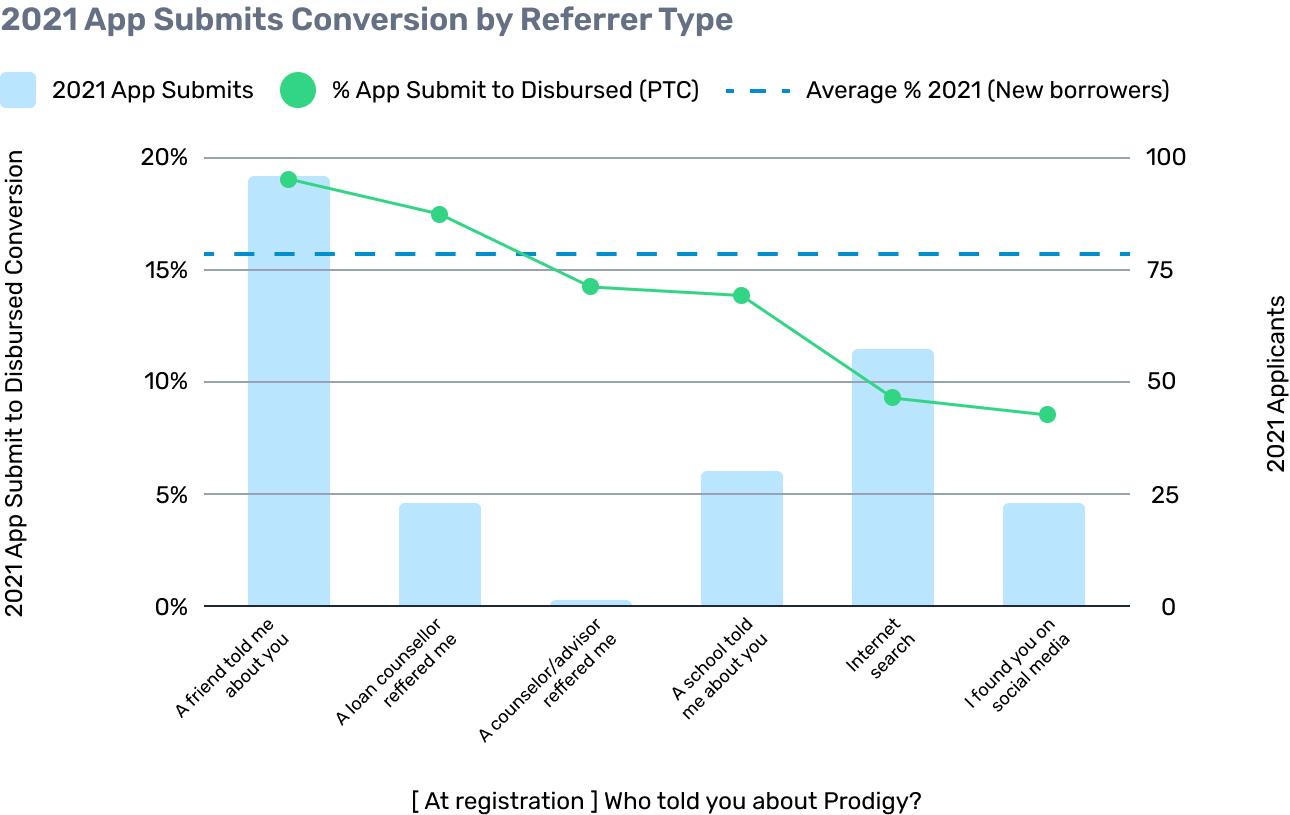
Interestingly, all 15 JTBD interviewed customers had found a way to chat to someone who’d use Prodigy before to gain trust. They often found it difficult if they hadn’t already been referred by a Prodigy customer friend with some going to LinkedIn to try and find people. The chart shows PF’s conversion rate split by how customers heard about them. We can see a correlated increase in conversion for friends and also affiliated partners (study portals):
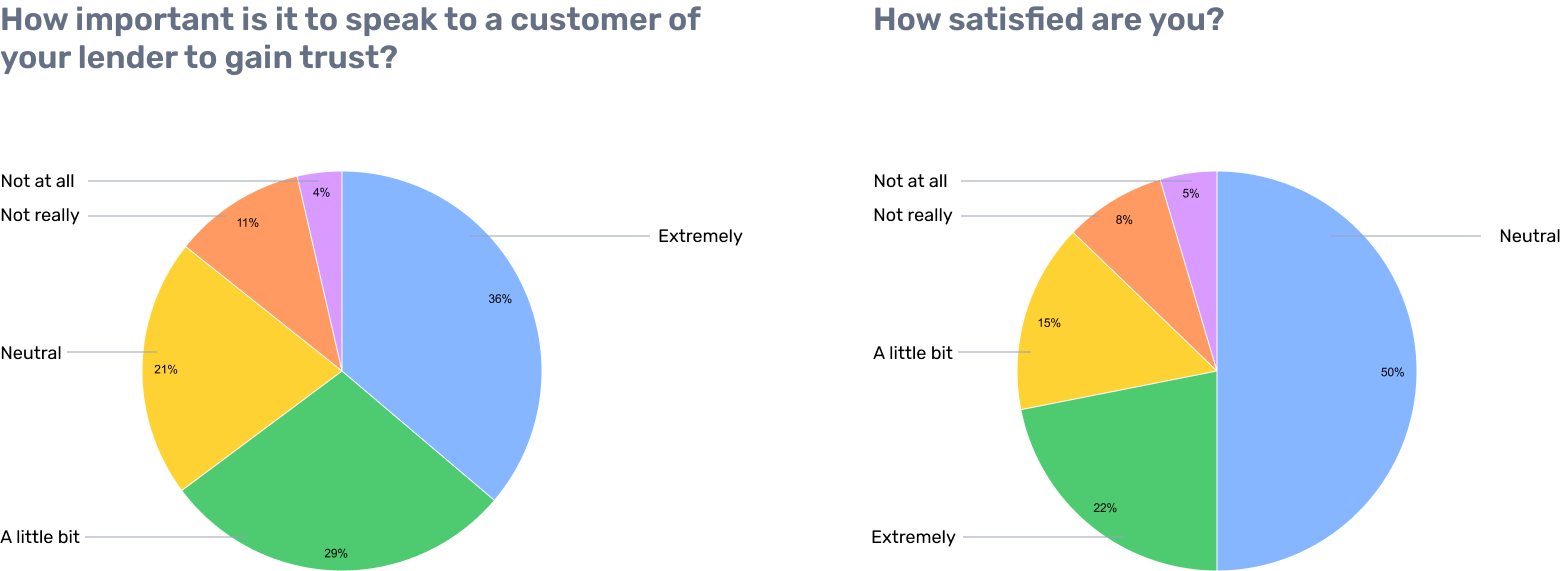

Top 3-4 questions are the same as the ones received by the customer support center – except ‘Can I trust these guys?’

Never got to know if prospects went to school

Some ambassadors desperately wanted to network with Prodigy Finance alumni

These types of conversations are about 1 to 1 human trust… Not for post-boards or forums

5 out of 6 ambassadors said they weren’t competitive… But then wanted to know their rank
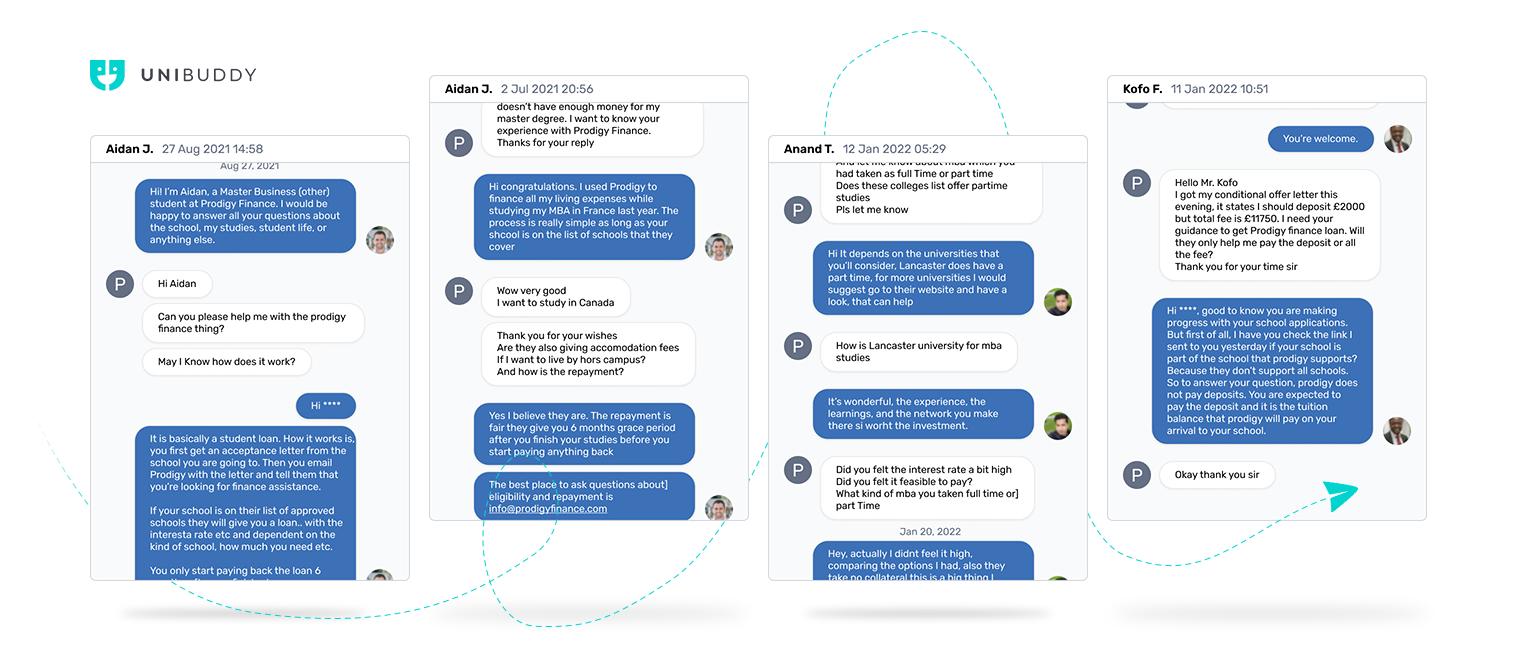
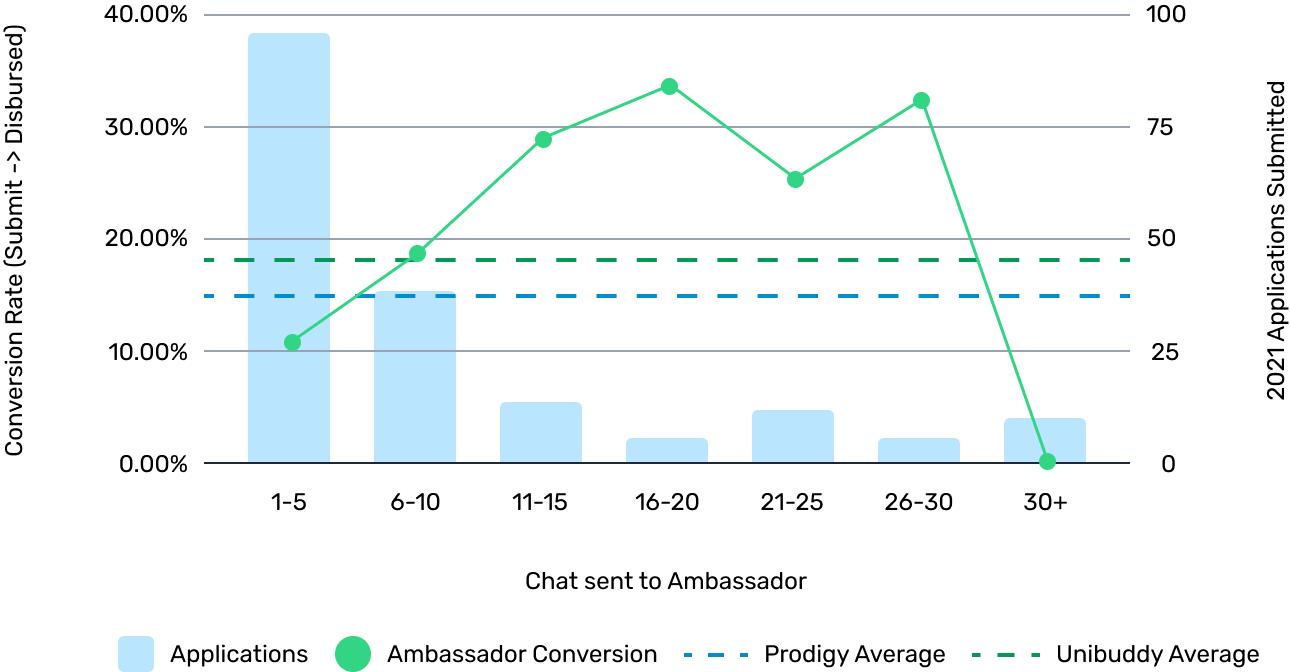
Prodigy Finance ran an ambassador program and in 2021 had 51 active ambassadors helping respond to questions from 803 prospective borrowers via a widget on their homepage using a 3rd party tool called UniBuddy:
We saw a higher than average conversion for these customers (could simply be a correlation, therefore we ran an experiment in attempt to also prove causation).
Looks like borrowers convert a little worse than Prodigy’s average 2021 conversion. Negative effect?
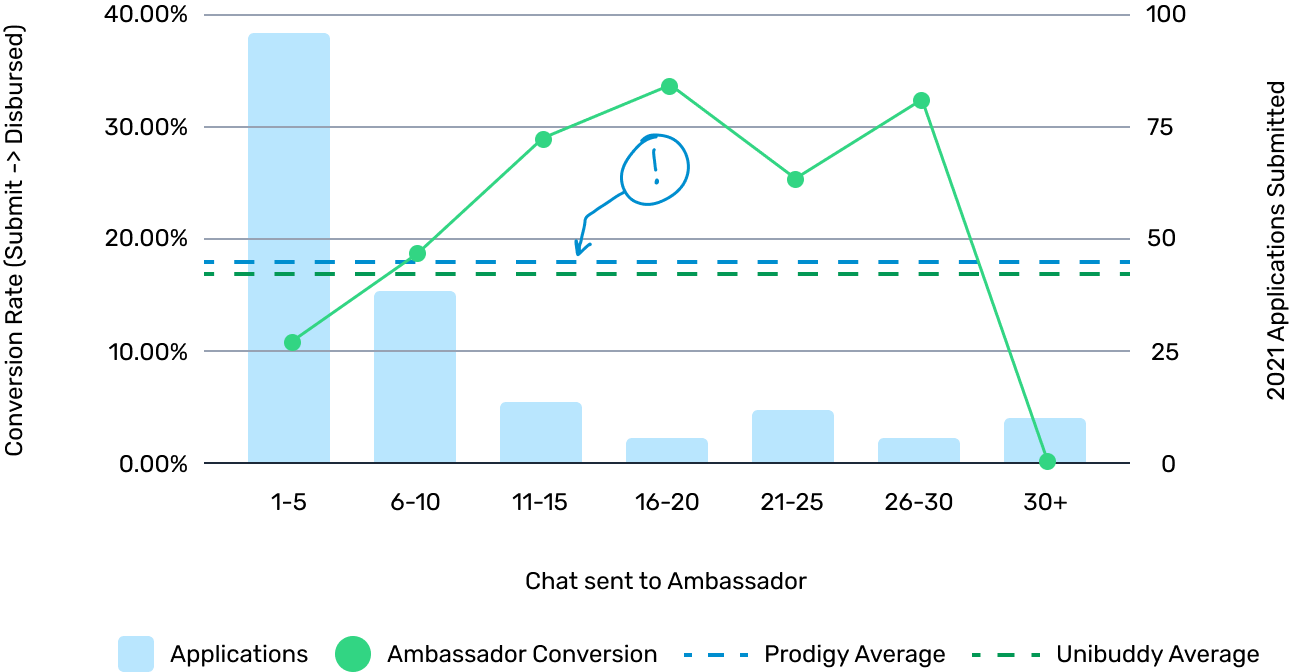
We saw above that where a prospect sent between 6 and 30 messages to their ambassador converted at a much higher rate to get their loan disbursed. After looking at the individual chats in UniBuddy it’s clear that a quality conversion where trust is established only begins after 5 messages as before it’s just “Hi” and “Hi” being exchanged, or worse, a dead-end type of conversation.
And that those over 30 chats are clearly ‘over chatting’ and can lead to wasting the ambassador’s time due to the prospect not really being suitable for overseas education.
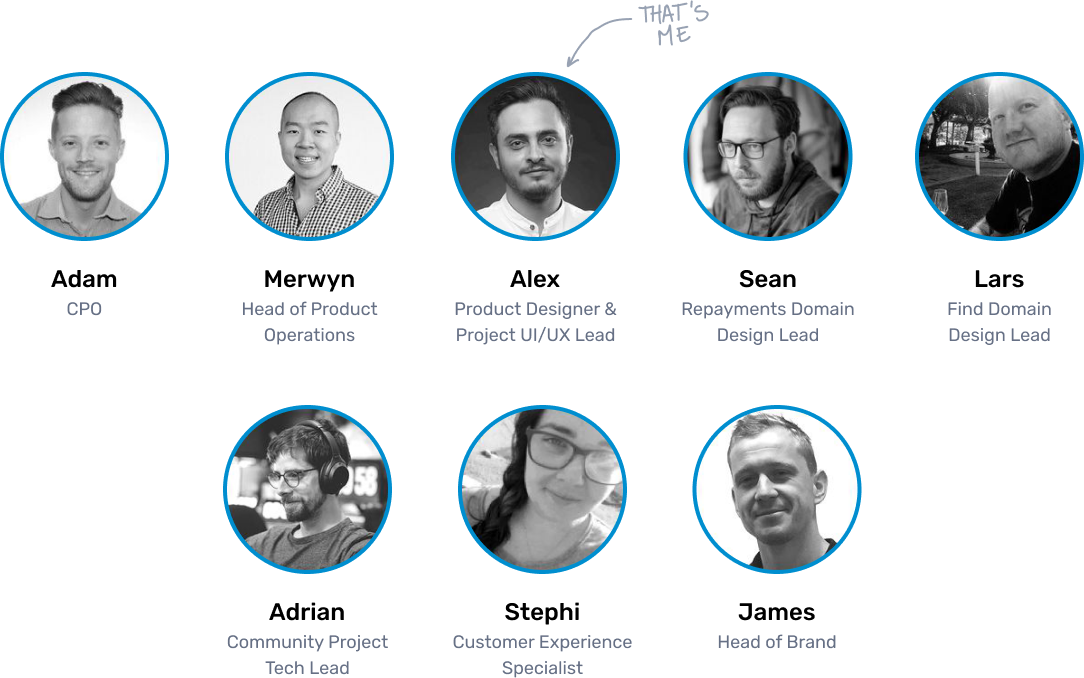

- Went through and discussed the Community PRD
- Revisited JTBD from interviews & the survey
- Decided on what needed to be solved
- Set up desired outcome for the day
- Job stories
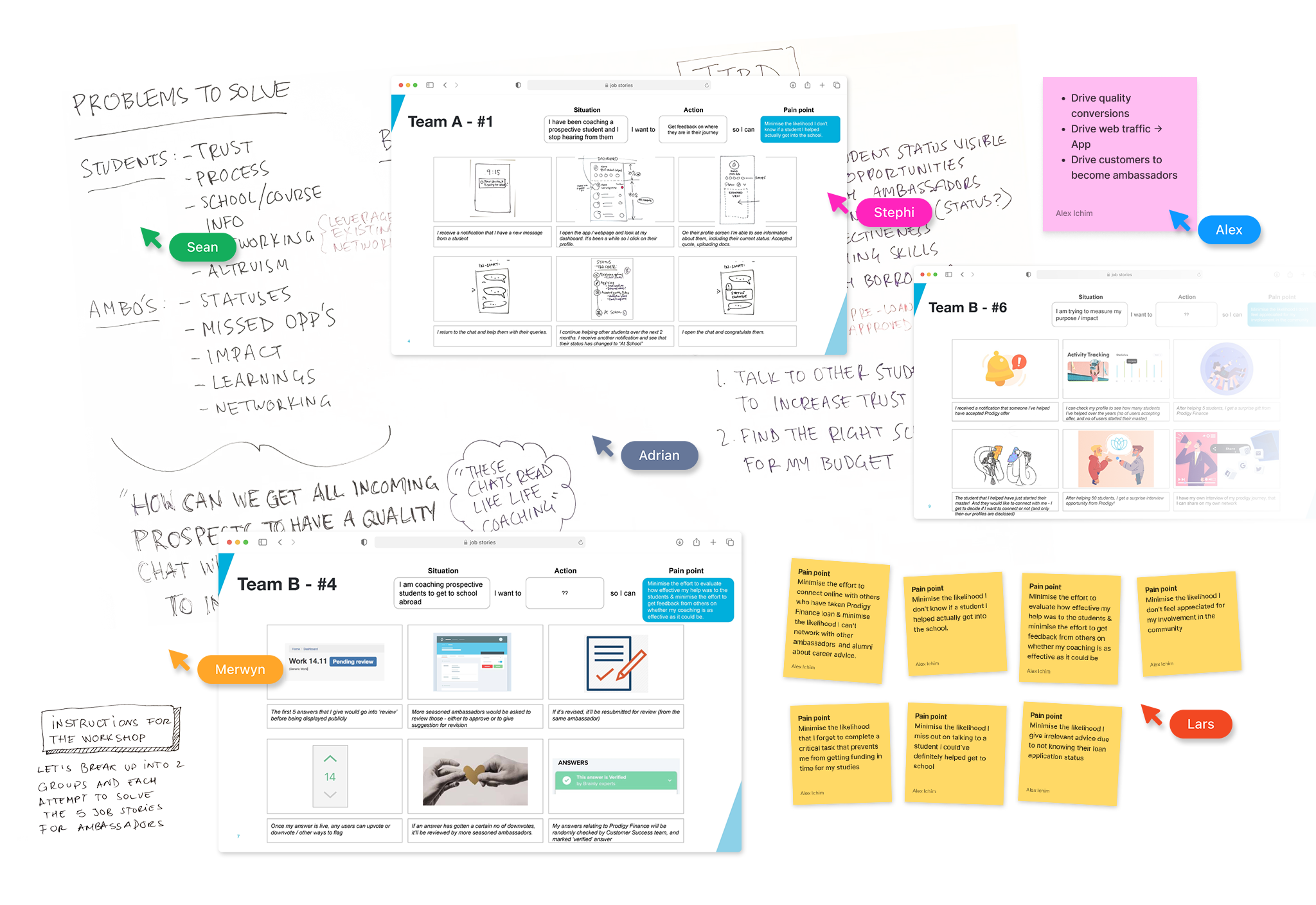

- Defined User Journeys for ambassadors
- Selected and prioritized jobs to be solved
- Rapid prototyping / sketches
- End-of-day ambassador interview
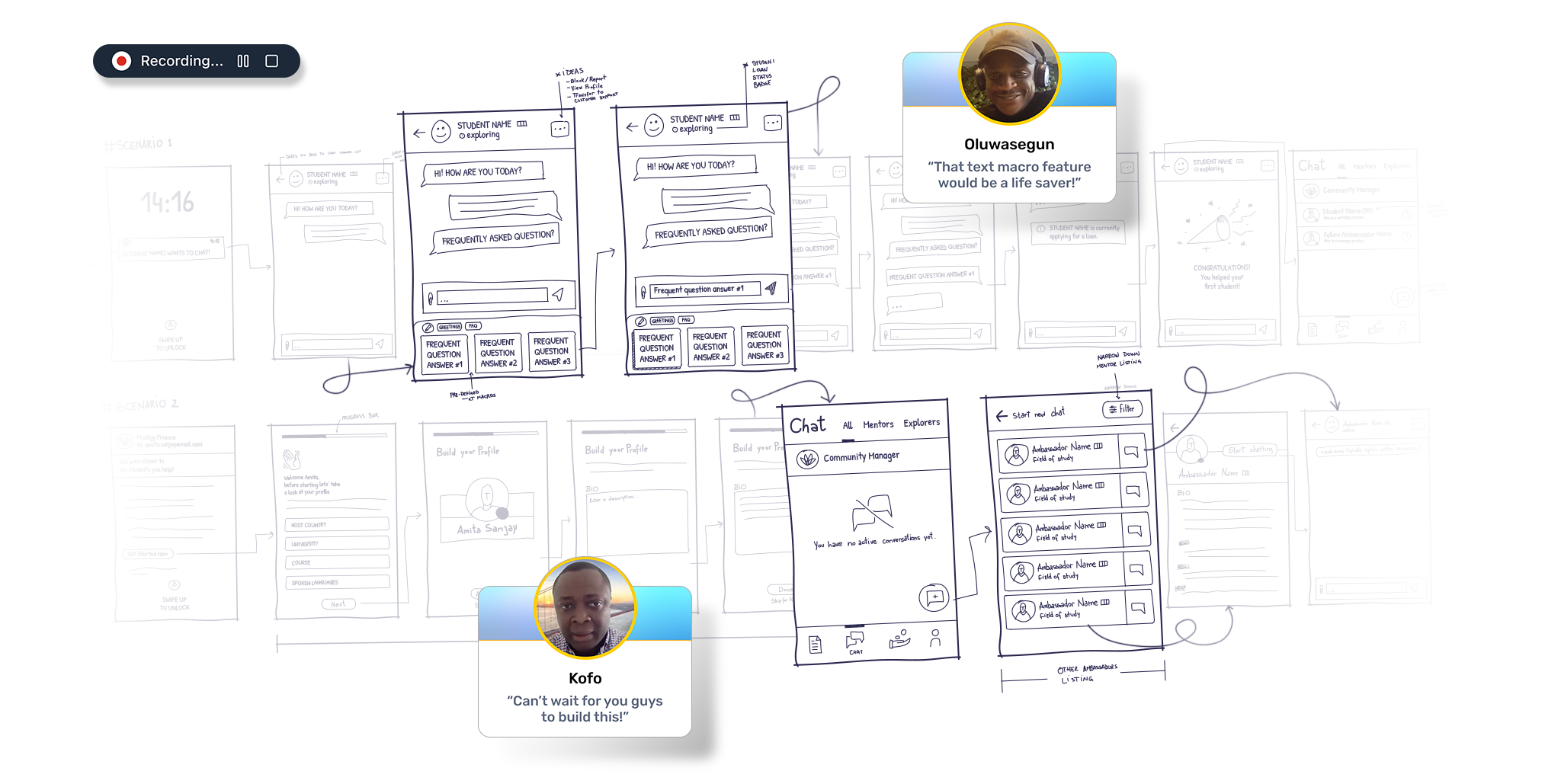

- Revisited JTBD for explorers and students
- Outcomes based user journeys
- Decided on what’s needed to be solved
- Jobs stories & rapid prototyping
- End-of-day explorer interview
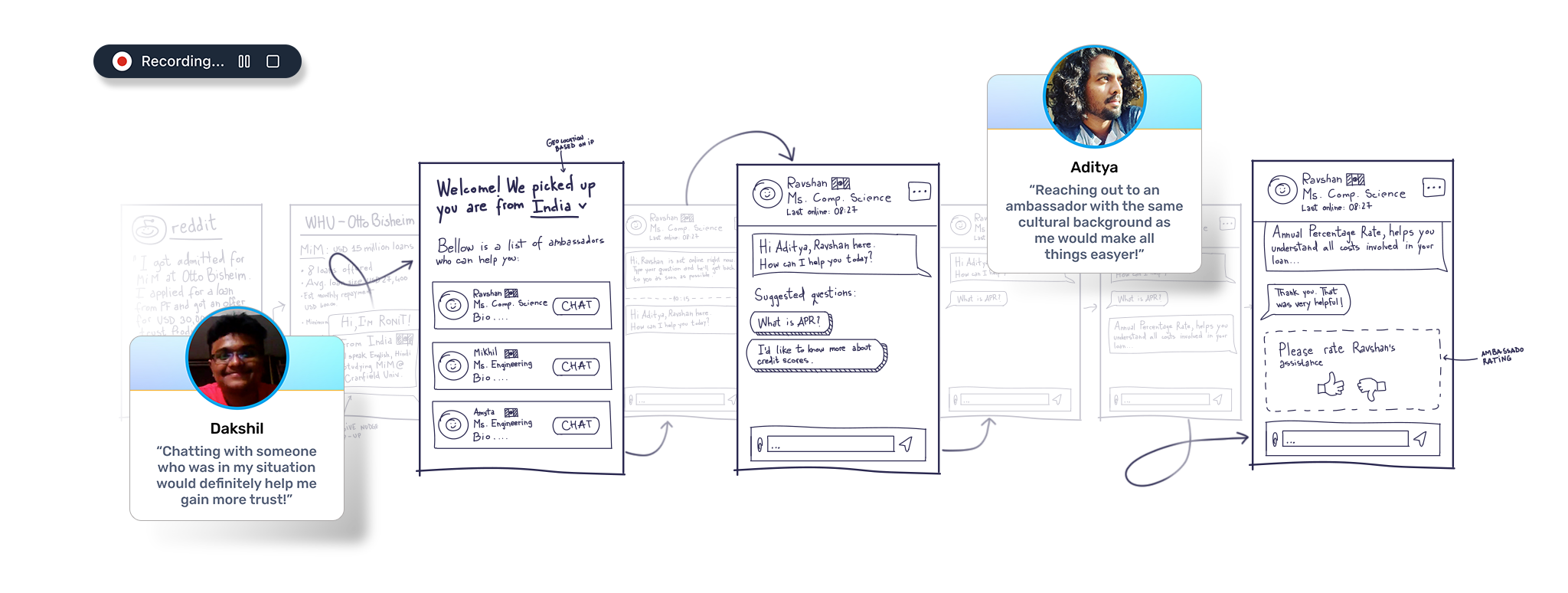
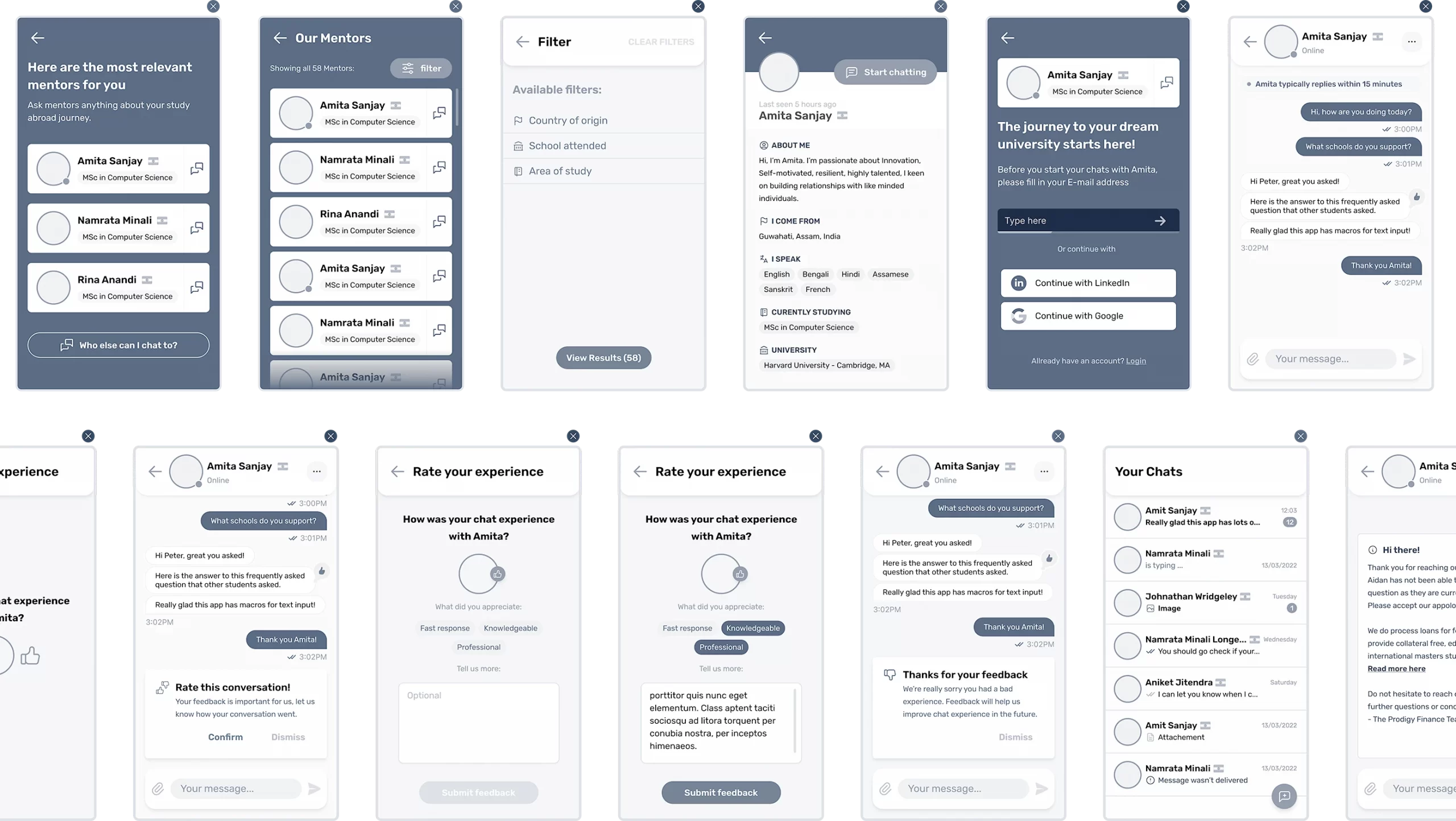
At the beginning, we needed to define the high-level flows for the two user types: Explorers and Ambassadors. Mapping the Information Architecture helped us to plan where to put each piece of the puzzle.
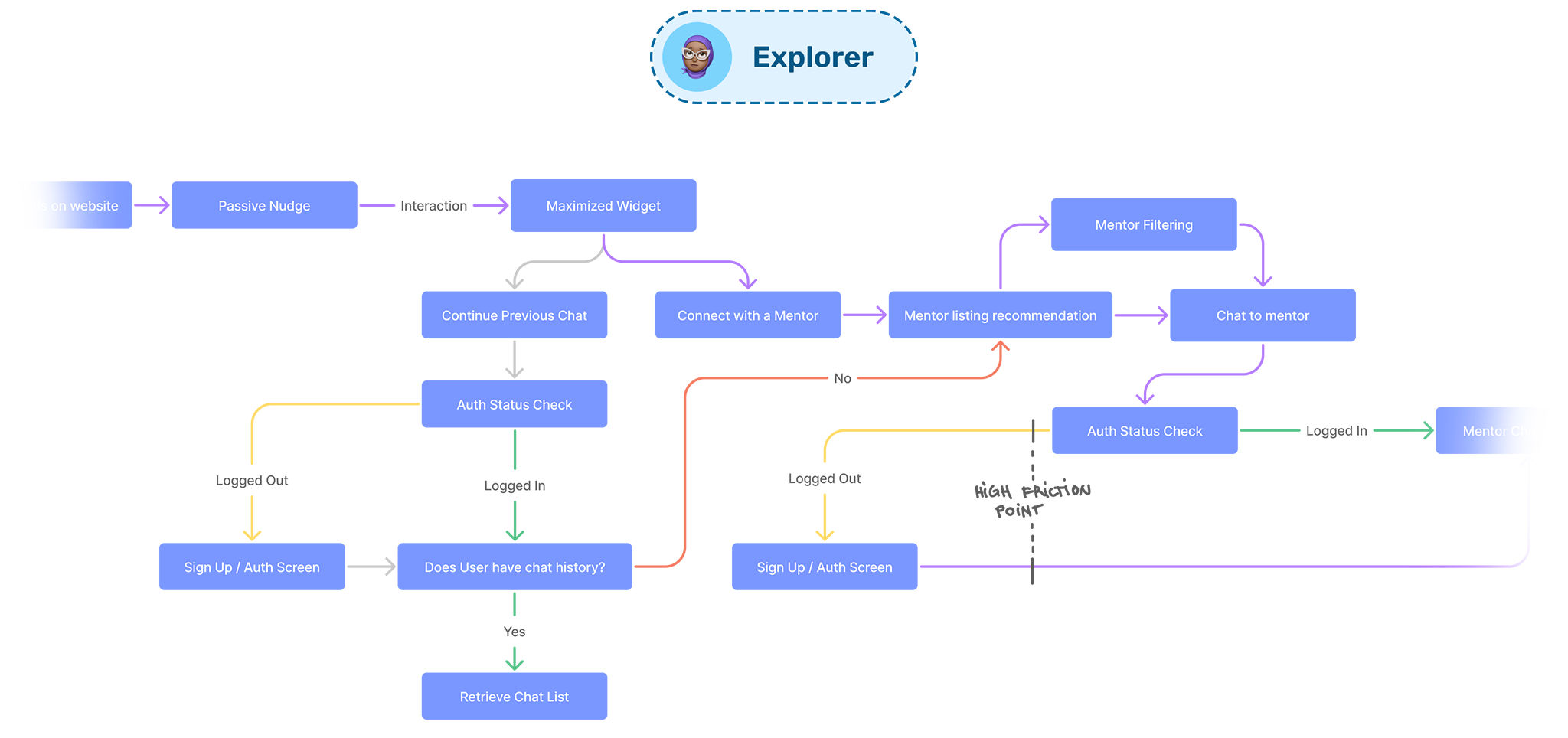
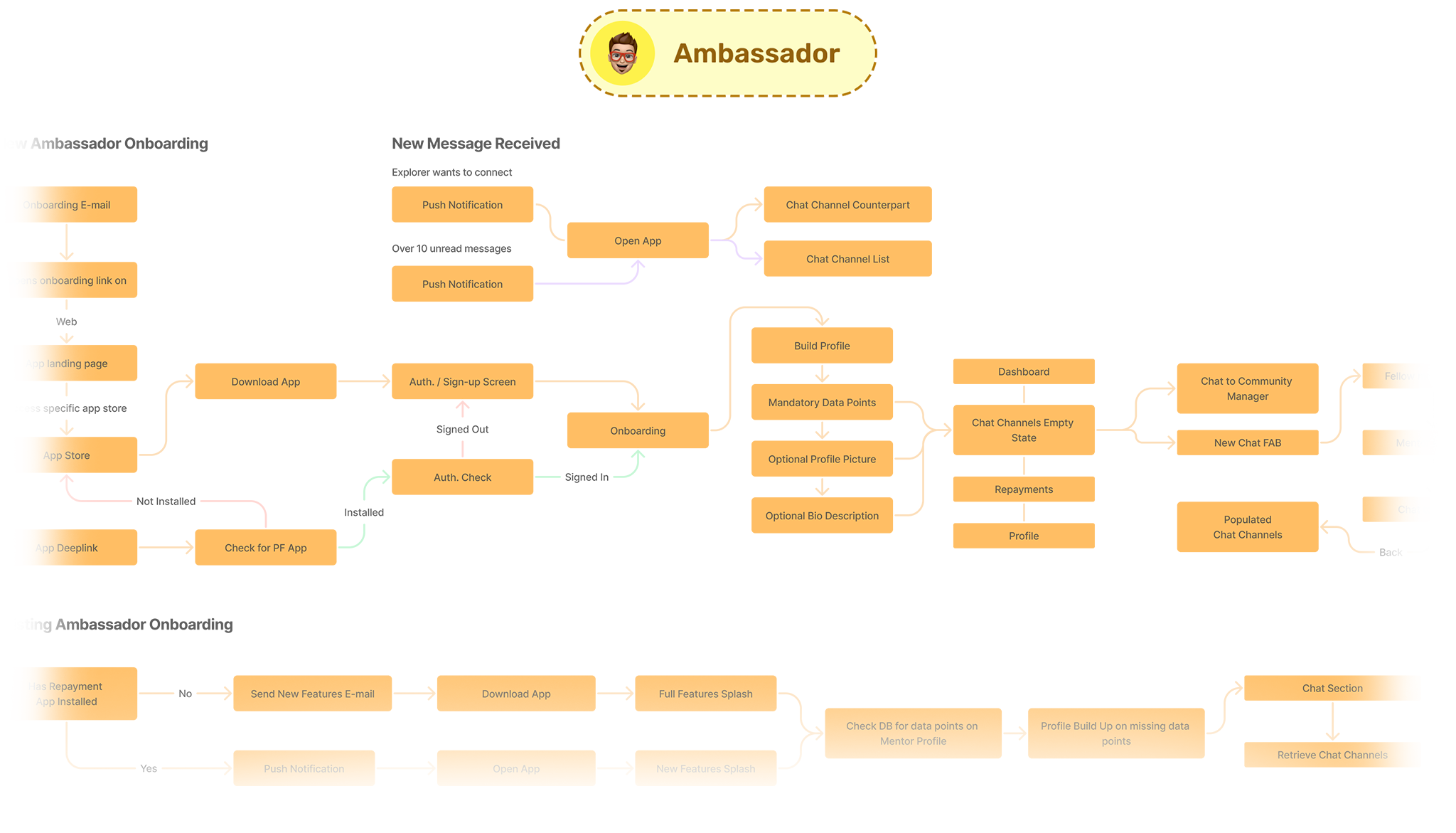
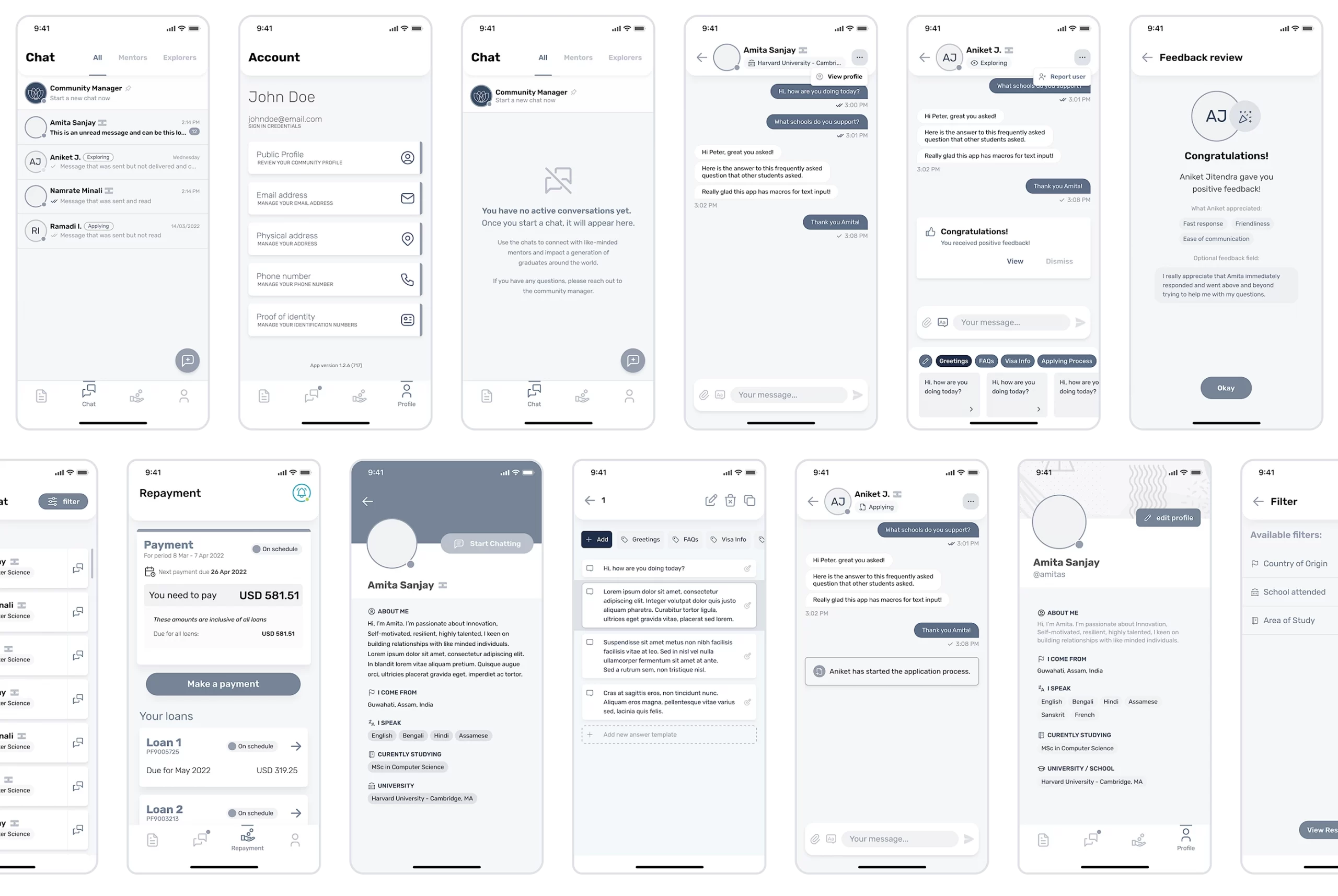
Based on the insights from the research and user flows, I created high-fidelity prototype wireframes to test and validate our hypothesis. The wireframes were designed to explore different ways of solving the identified problems, and were iterated and refined through a series of rapid prototyping and testing cycles. The resulting clickable prototype was provided to groups of explorers and ambassadors for testing and feedback. Through this process, we were able to identify and address difficult screens and improve the designs.


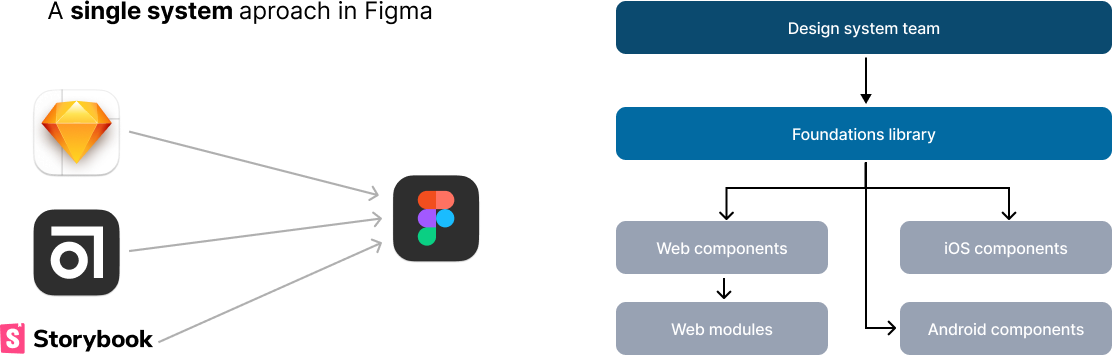
By the time I joined the team to develop this product, the need of adding new features lead to a widening gap between the design needs and what the previous design system could cover. One of the main requirements was to make Prodigy Finance’s new product feel modern, but not to stray away from the current brand, as a complete re-branding was not feasible in the given time frame to launch the MVP.
Even before I joined Prodigy Finance, the team knew that the design files were not in the best shape. Each of the two platforms had a small pattern library since there were only 2 designers (Hi Sean, Lars!) in the design team at that moment, that were still responsible for the design roadmap across web and mobile.
Our approach was to solve problems one at a time. Agree on a small, attainable goal and validate solutions through experimentation before implementation. We tackled high-impact, low-effort solutions first, progressively reducing the workload required to maintain both design and code.
Cross-team alignment was built in at every stage of the process. This allowed us to catch problems early, reducing costly rollbacks.

During the audit, mind maps proved a great tool to explore component relationships at a high-level.
As the sole Figma power user in the organization, I was responsible for leading the revamp and migration of the design system to a single source of truth. This involved working with designers and developers to align and update our workflows, and writing design documentation. The effort resulted in a successfully revamped and migrated design system, and improved efficiency and effectiveness for the design team.
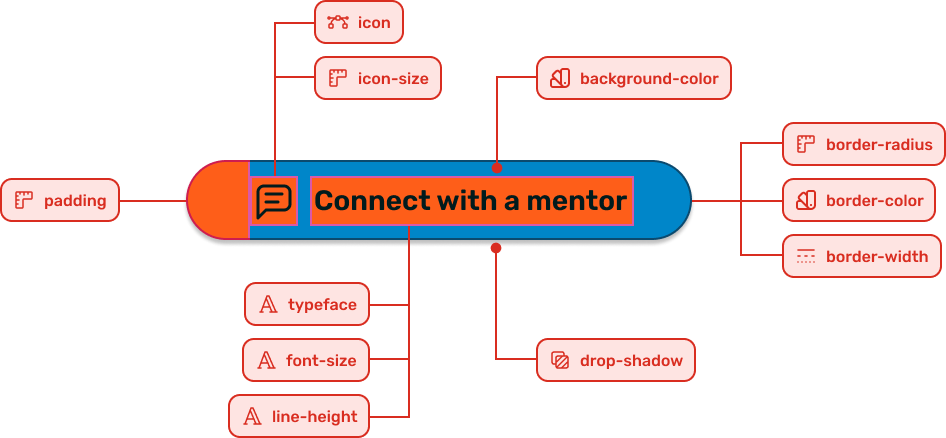
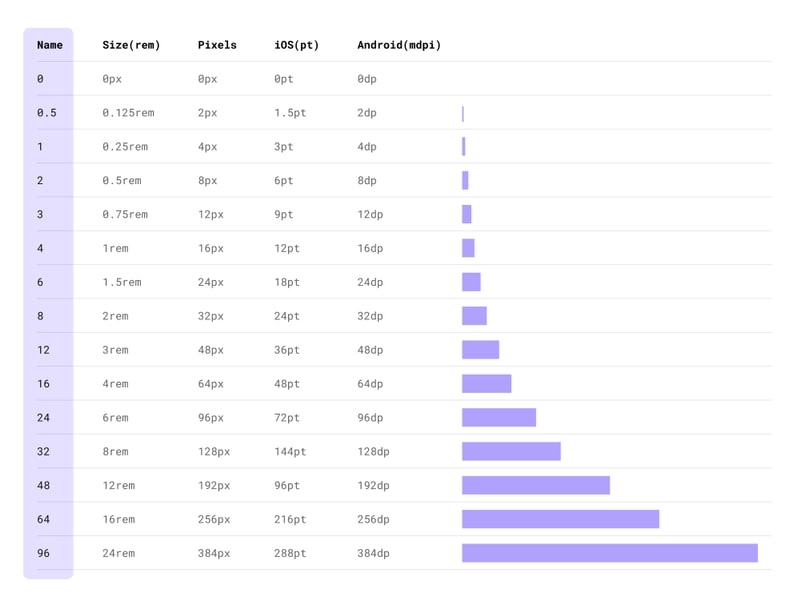
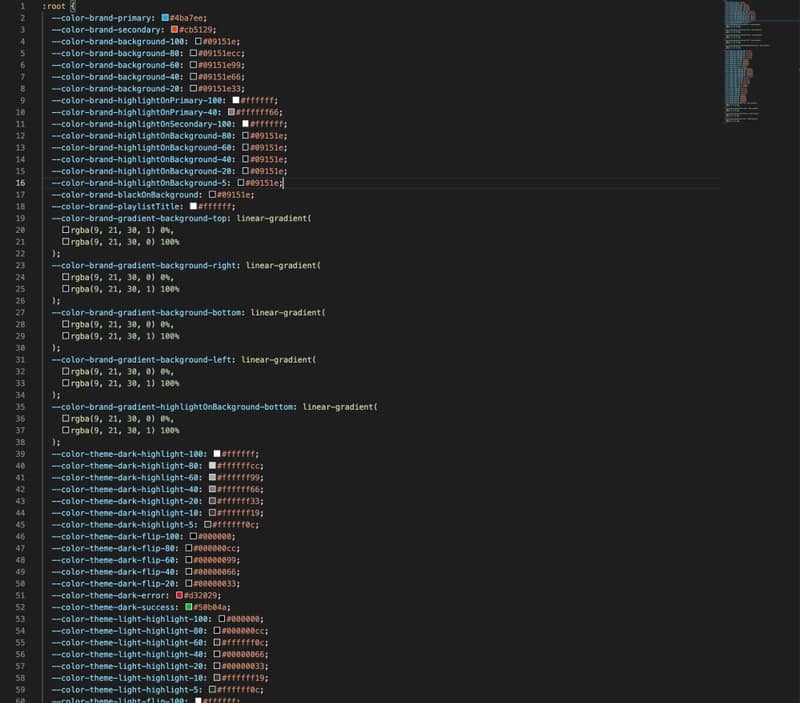
Based on the insights from the UI audit, we embarked on the process to define and document the fundamental properties that give UI components their appearance and behavior.
The most important are: layout, colours, shape, and motion…
But also: spacing, text styles, icons, corner radiuses, shadows, image ratios and more…
After identifying these properties, we went through a process based on small experiments and consultation for technical feasibility to eventually come up with solid rules that underpin our design system.
Under the direction of our Head of Development, all designers and developers began adopting Tailwind naming and utilities to build our UI.
Why? This allowed us to standardize our components and speak the same language across all teams and platforms.
Defining and documenting these rules proved the key to success.
- Solid foundations. These properties provide the foundation on which every other piece of UI is built on. Creating more complex components became a lot easier.
- Political capital. Once implemented, these properties provided an immediate benefit, convincing more teammates of the benefits of a design system.
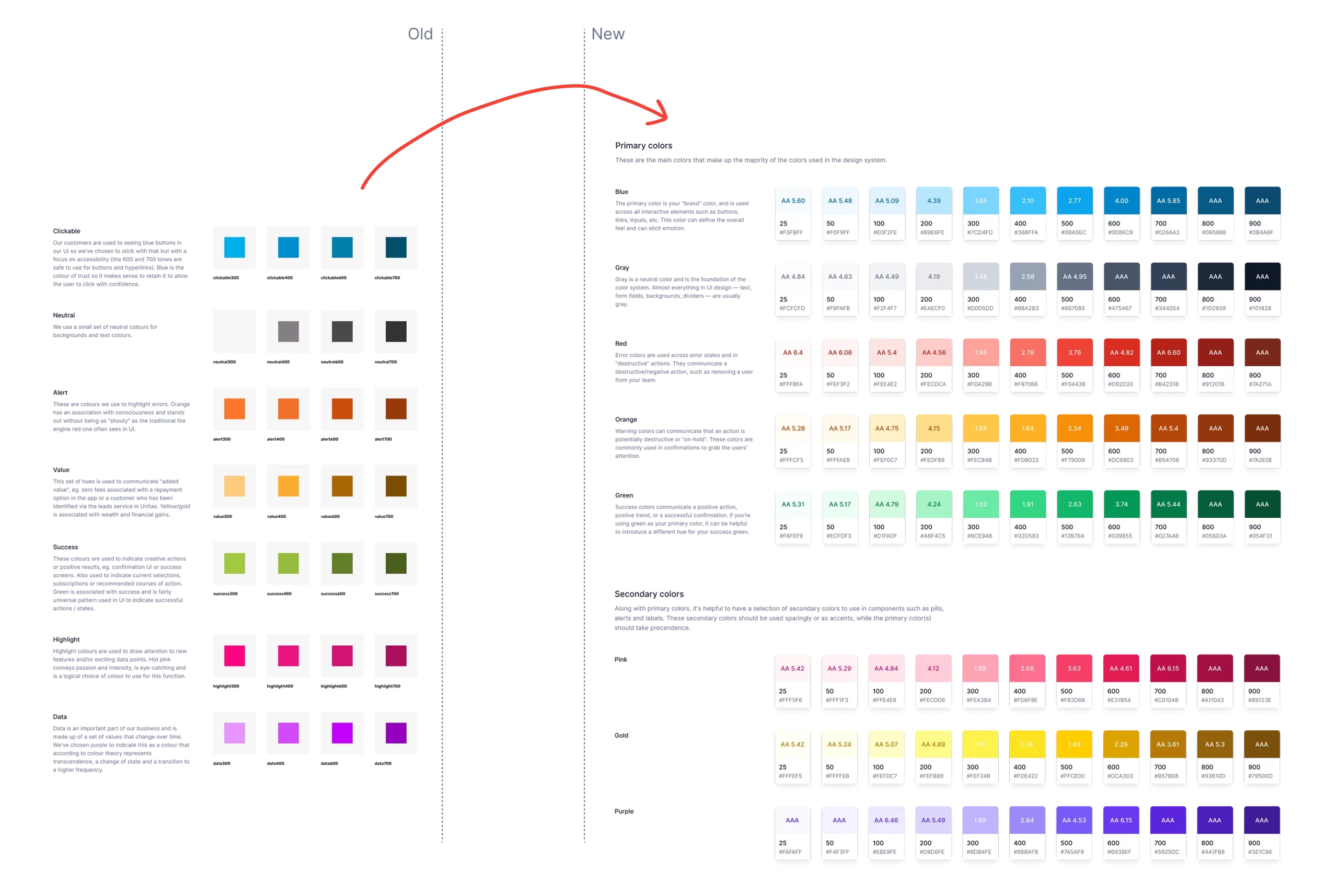
The design system leverages a purposeful set of color styles. When it comes to color, contrast is critical for ensuring text is legible. I’ve added WCAG 2.1 contrast ratios to the color system so anyone can make sure they’re designing with accessibility in mind.
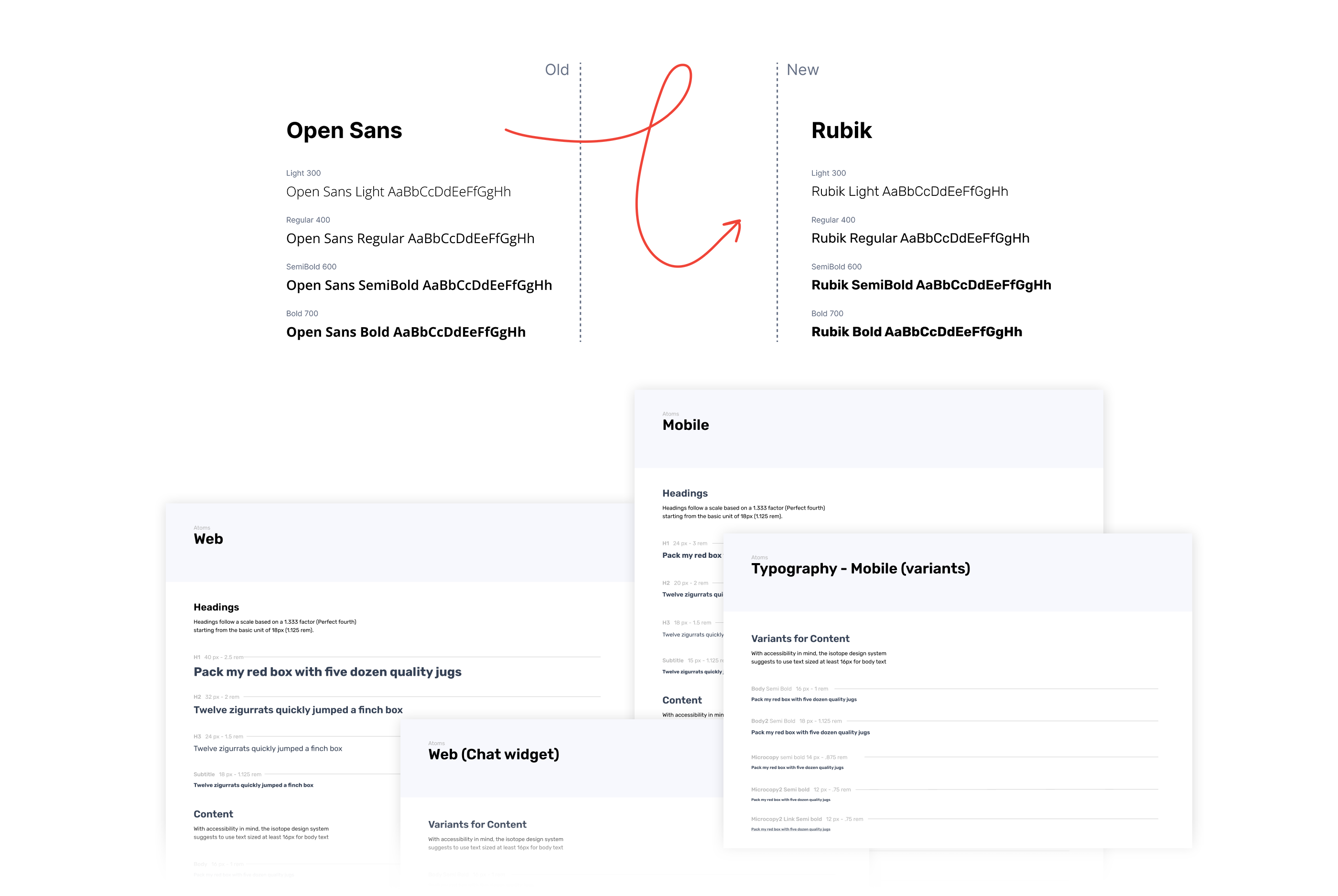
A new vision for 2022 – Introducing Rubik.
Rubik is a bold and confident typeface and we’ve chosen it to replace our slightly dated and impersonal font Open Sans. It scales well on mobile applications and gives our UI a new confidence and personality.
Iconography is an important part of a brand’s visual language and enhances readability.
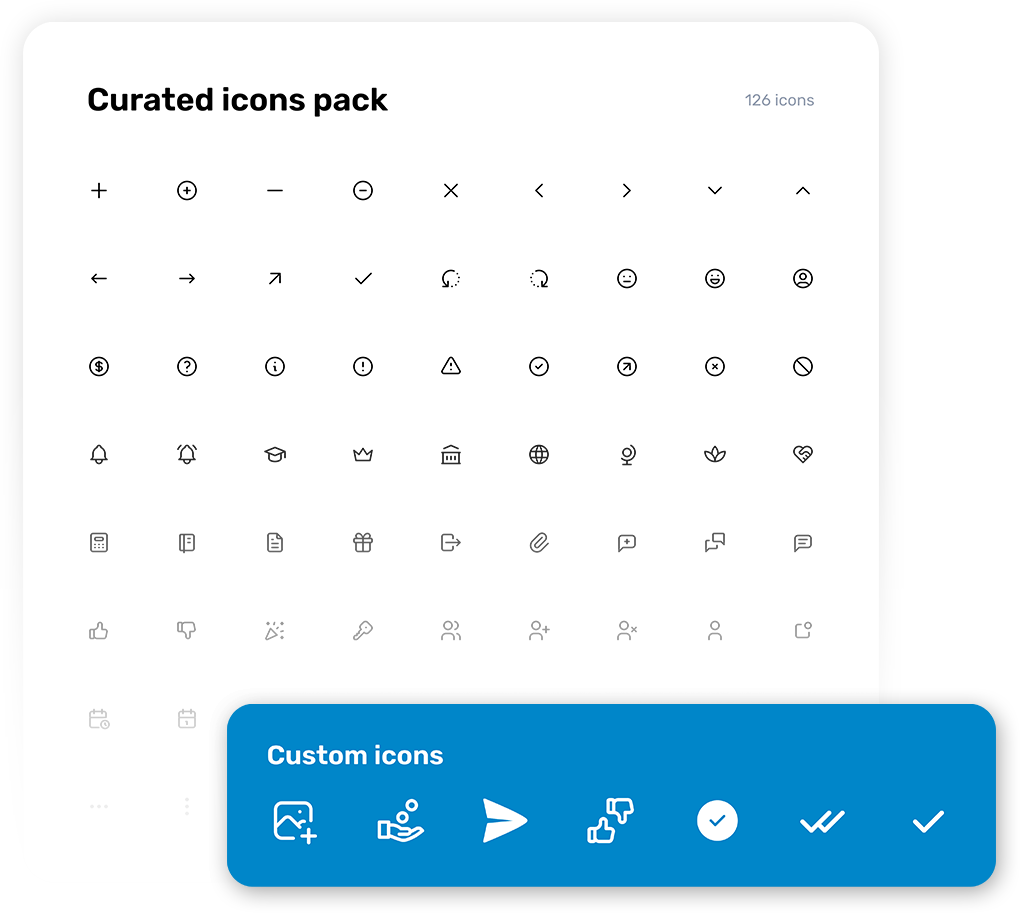
We’ve chosen and curated a 126+ icons pack from an open source library set called Tabler Icons. The style and versatility of this library suits our purposes in lieu of the time to design our own set. The style is simple enough to replicate when we need to create new icons, the existing icons communicate well and allow for variable stroke width. There were 7 custom icons designed in the same style as the library set.
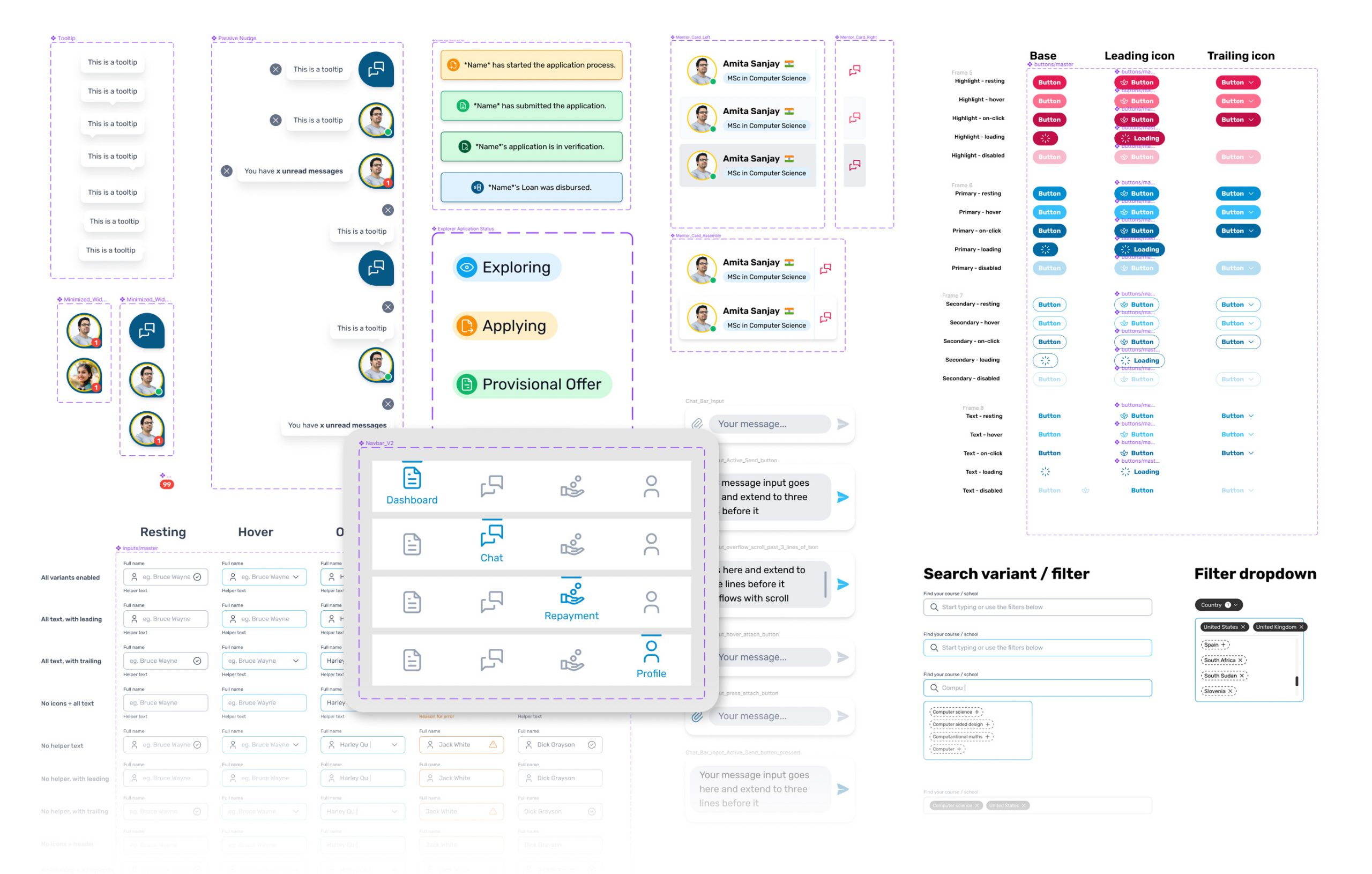
We used Atomic Design as a framework for our design system, and went through the process of breaking down and rebuilding previous components using the new consolidated design tokens. This allowed us to create a standardized, documented, and reusable design system that met the needs of the organization design efforts.
The aim was to increase perceived reliability & trustworthiness among prospective borrowers if we connect them at the right touch points with ambassadors that have the same background and are currently on the Prodigy Finance journey, leading to higher conversion rates.
GUIDING PRINCIPLES
Serve users quickly – Desire to speak to a person increases with the complexity of information needed by the user (increased trust in ambassadors who took the same study path / have similar background).
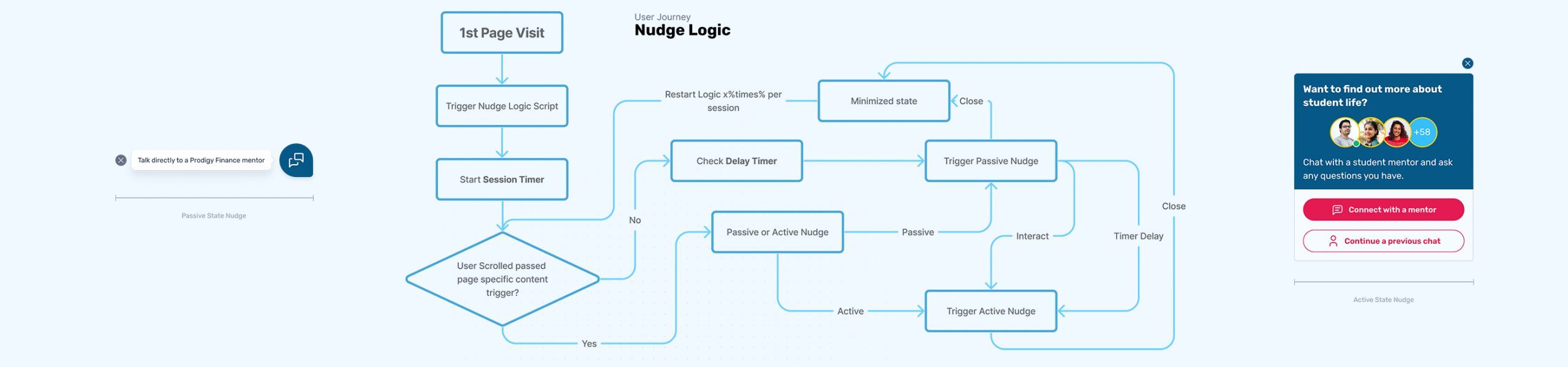
Having the right context for nudging allows the user to reach the goal more easily than earlier. Almost 70% of the work is done when the right context is identified. The remaining 30% is to implement the right nudge at the right user journey point such that the user realizes that what is being nudged is what he was looking for on the PF website. This should influence copy for each nudge type and trigger milestone.
Priming has a lot to do with preparation and association before a decision. Certain studies show that people, who are guided (or have questions answered) regarding their intentions, are more likely to act and convert.
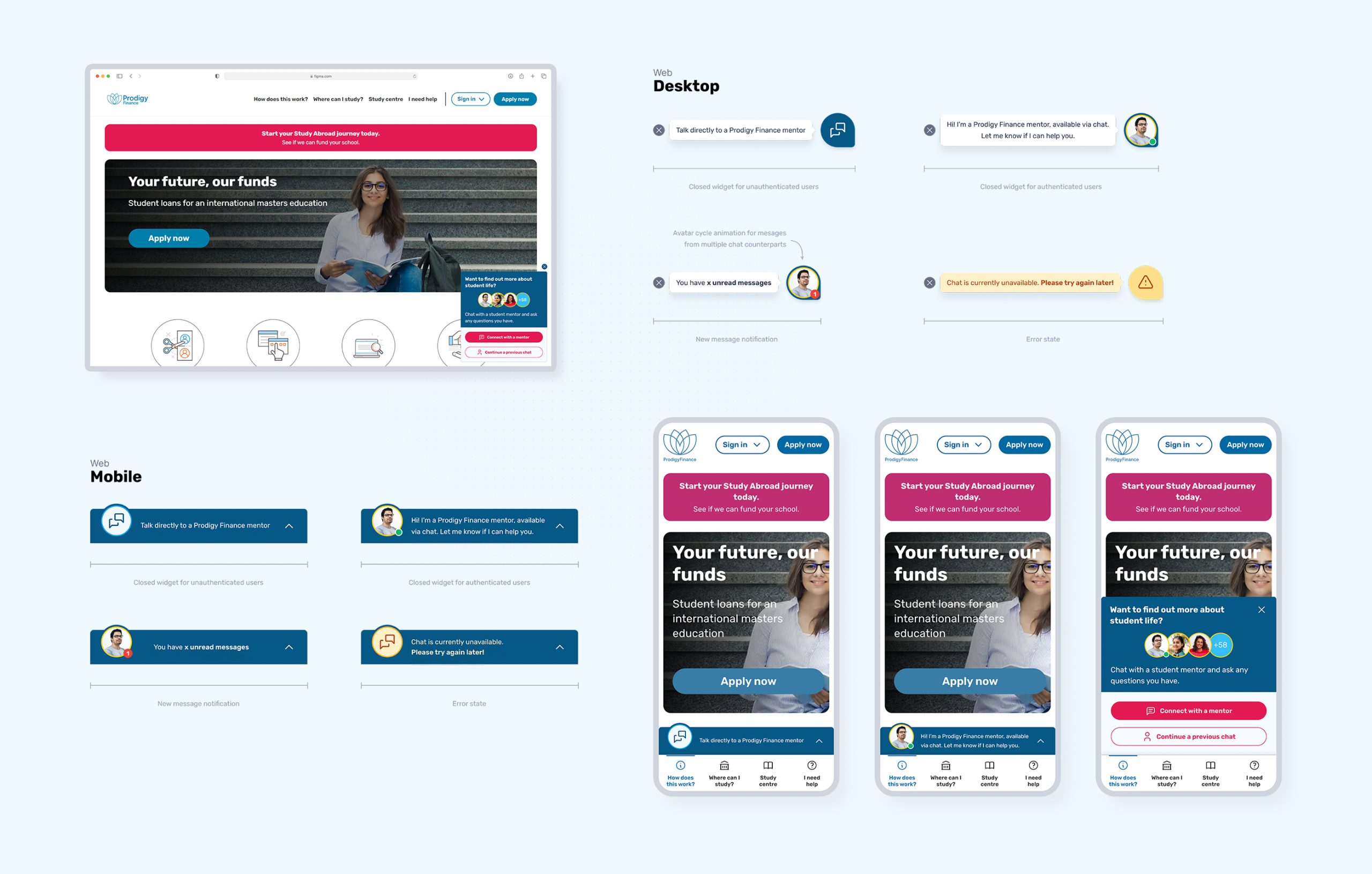
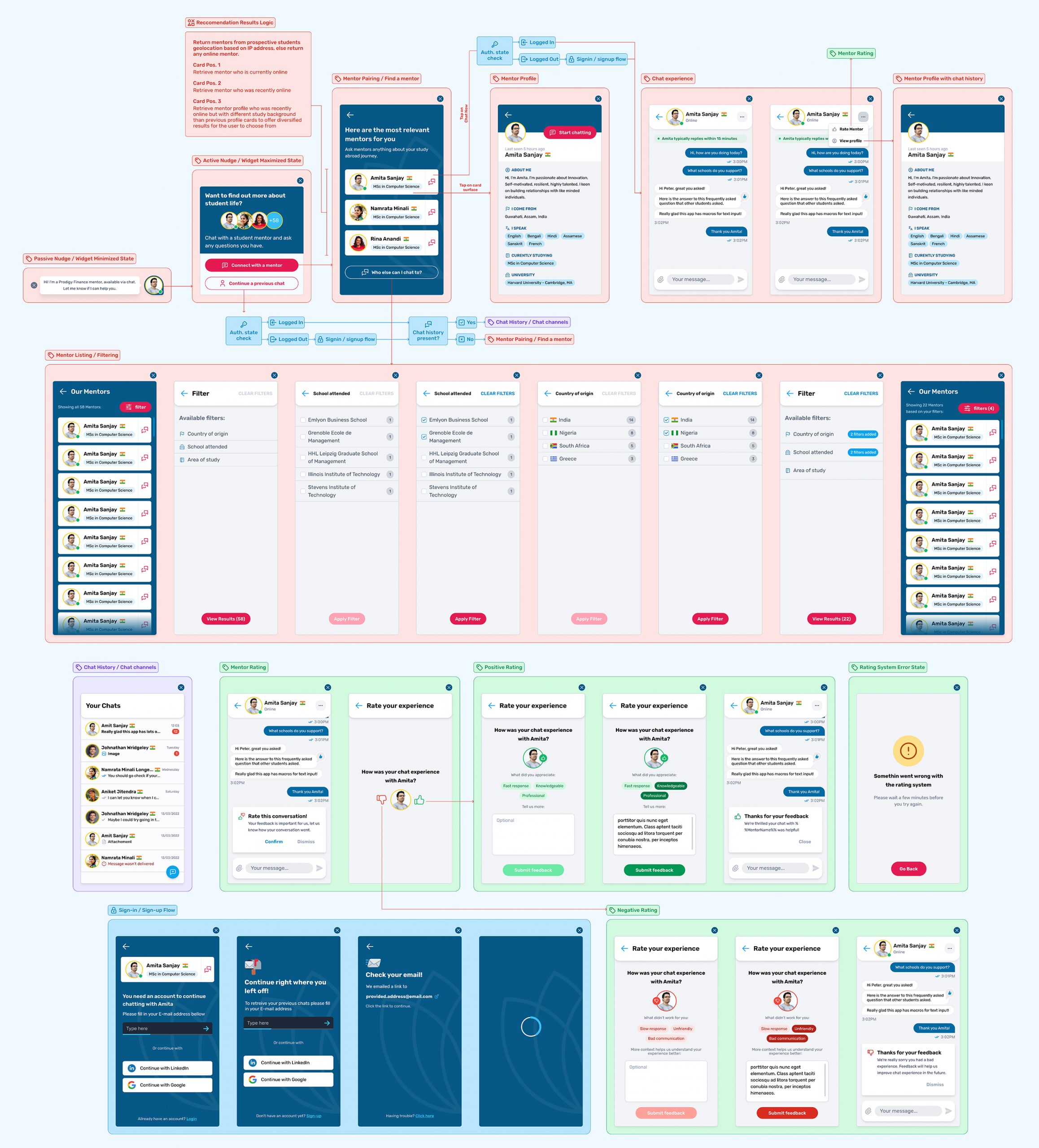
The current app represented a significant constraint, from a development and design stand point, as we needed to build on top vs. create a new app from scratch.
As current ambassadors were used to the UniBuddy experiment, we needed to retain them and prove value with this new product feature, guided by one of our hypothesis, that people come for the tool (loan) but stay for the network.
After crunching the data and conducting interviews with the ambassadors, I narrowed down the job stories that would be critical to releasing an MVP that ensured ambassadors were better served, with the goal of growing and scaling their impact.
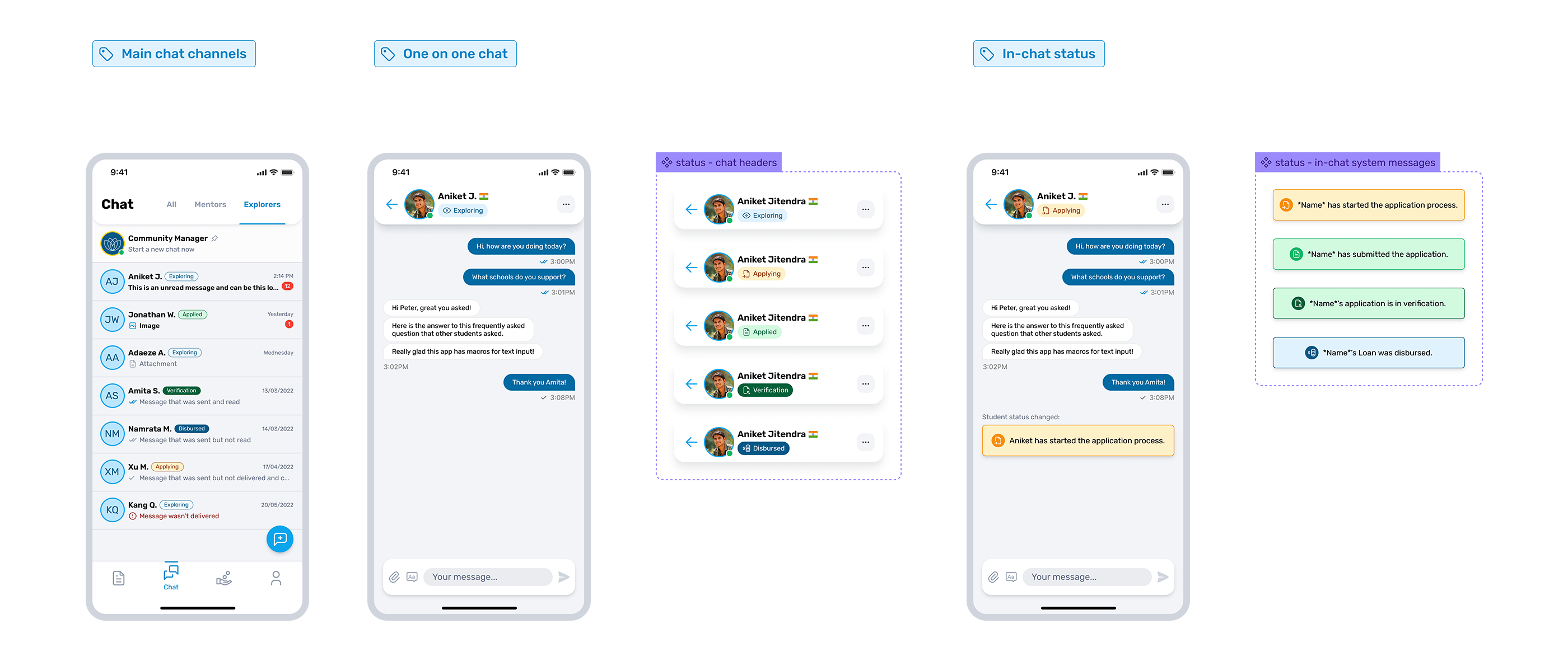
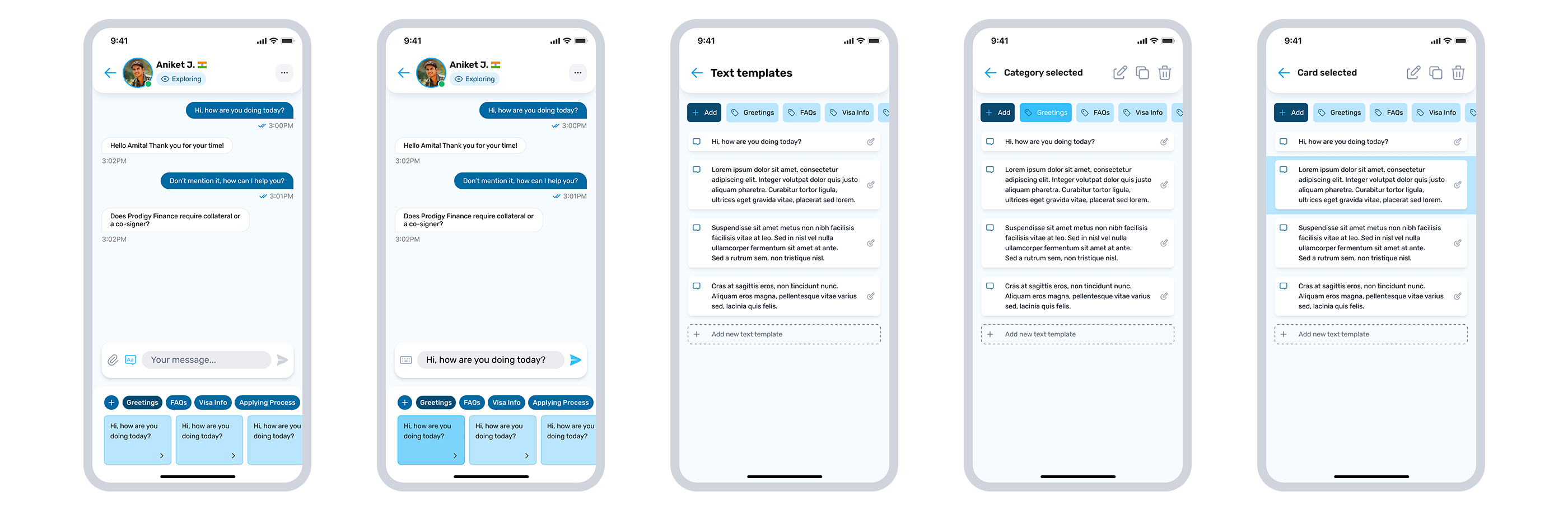
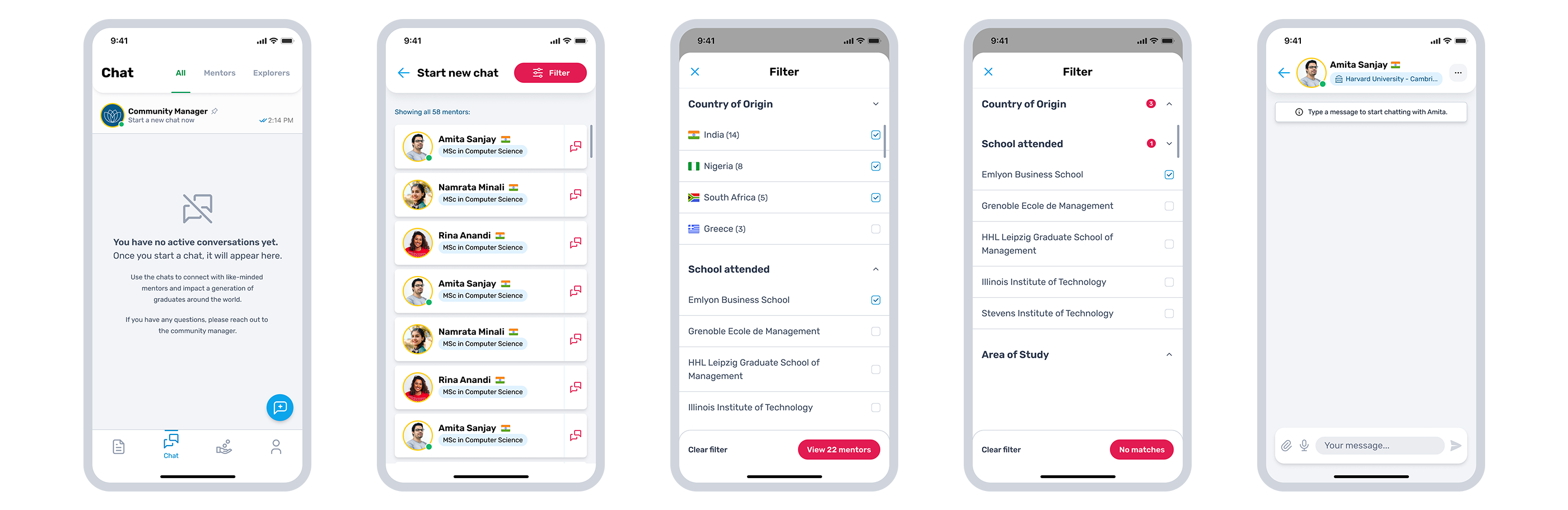
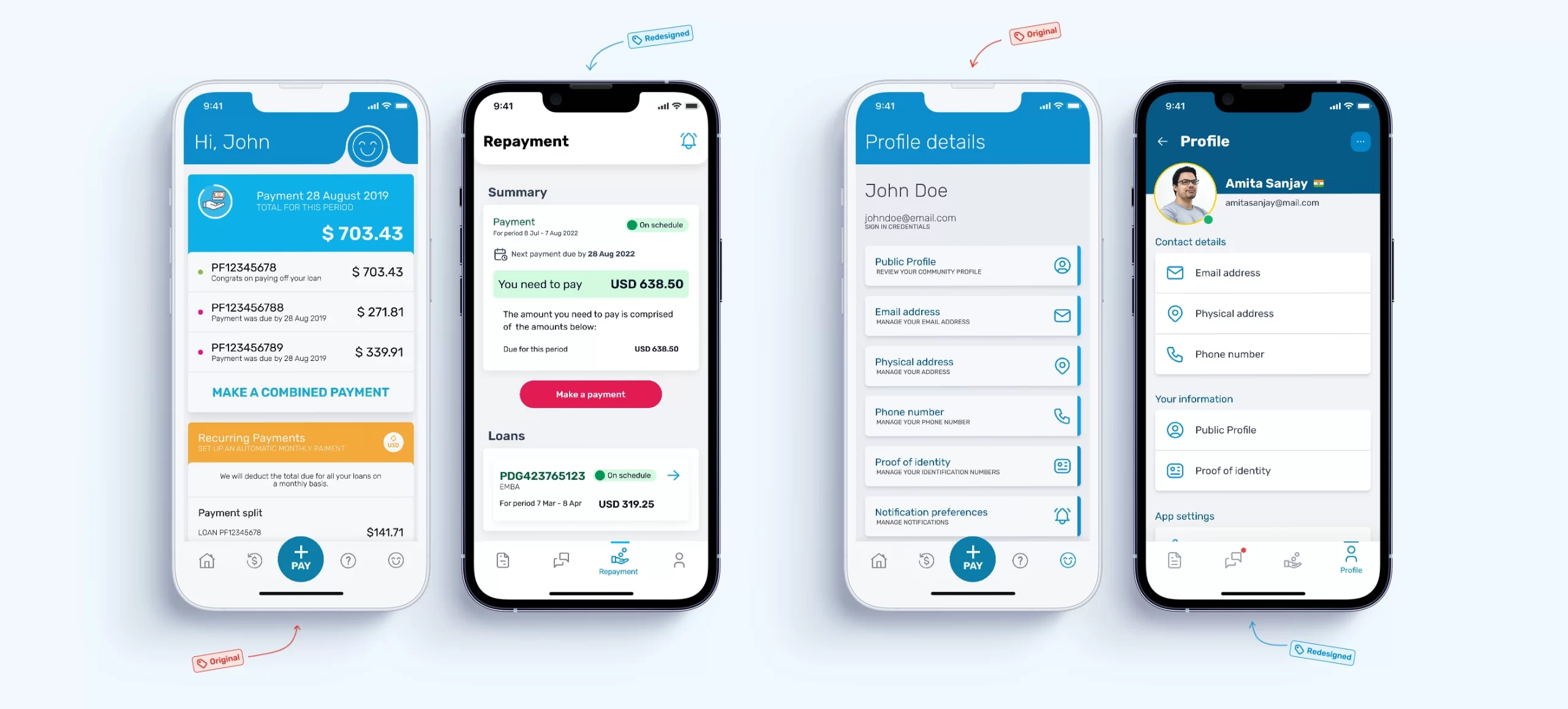
The app has undergone significant changes and improvements, but the repayment feature has been left unchanged. It no longer fits the updated design direction of the app, and users have reported confusion and frustration when using it. It’s time to redesign the repayment feature to match the sleek and intuitive design of the rest of the app. This will improve the user experience and make the app easier and more enjoyable to use.
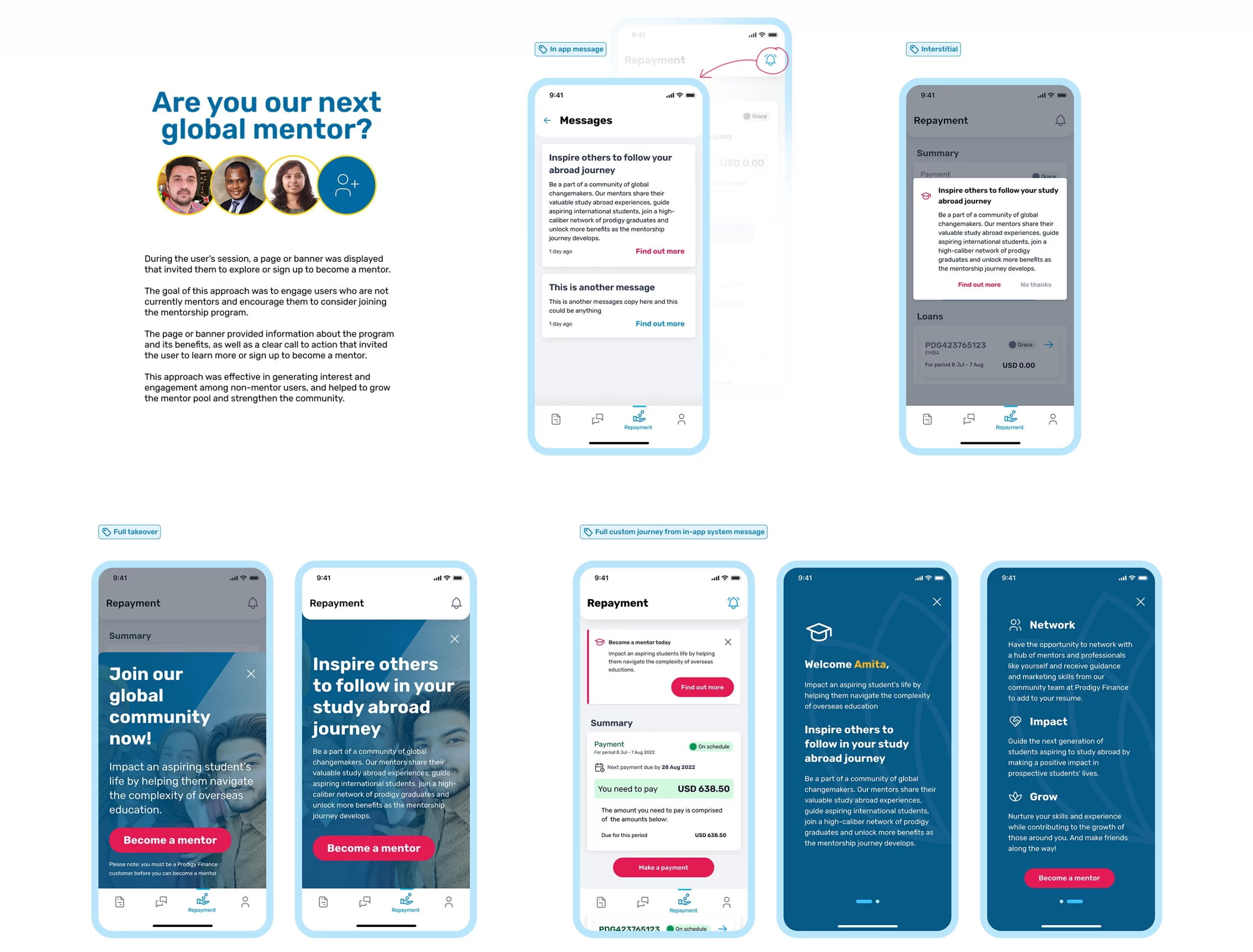
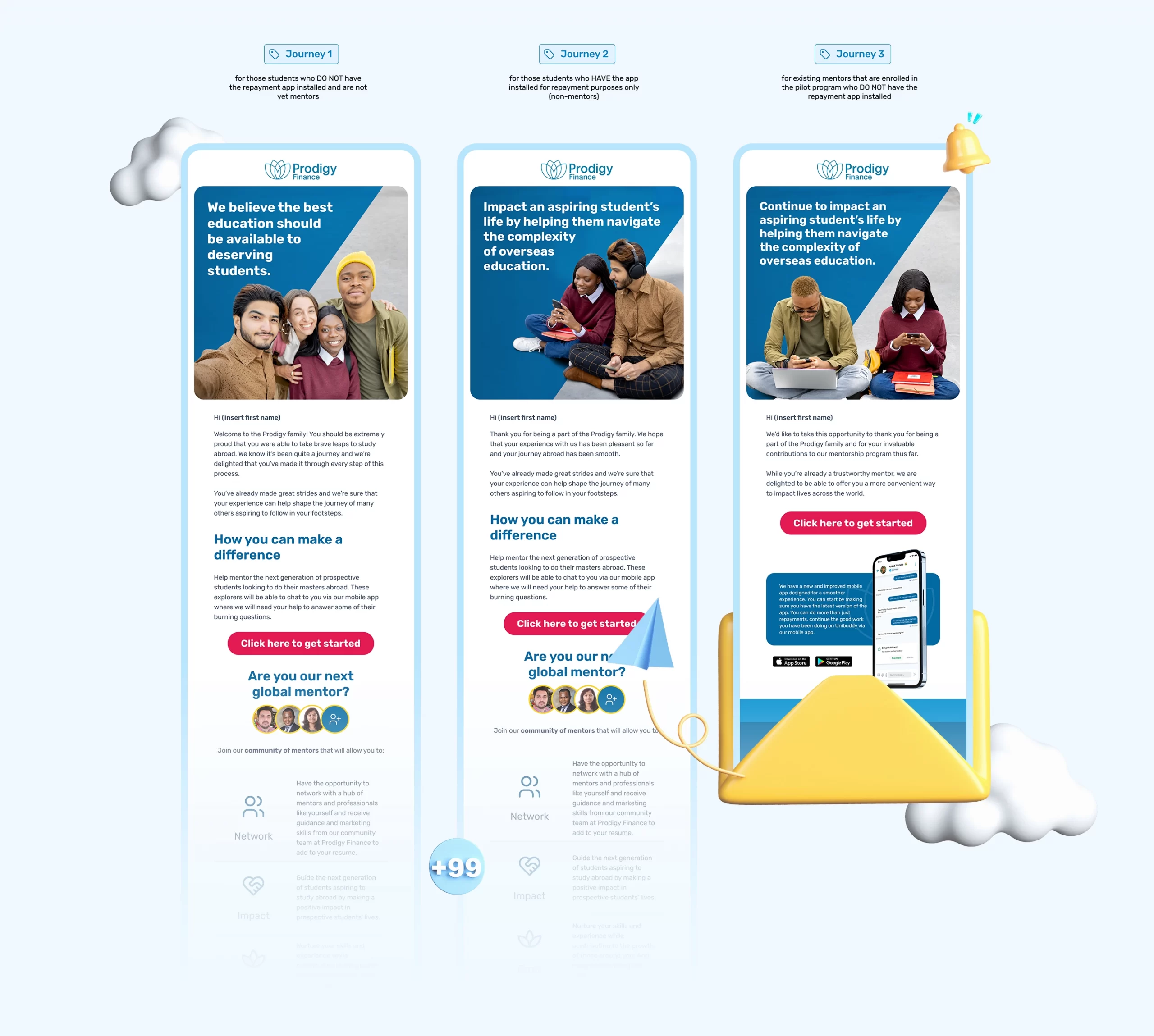
To expand the mentor pool, Prodigy Finance selects a group of alumni and students who are currently repaying their loans to enroll in the mentorship program. The goal is to help new mentors join the ambassador community and provide them with a smooth and seamless onboarding experience. The touchpoints that I designed are meant to facilitate this process and make it as easy as possible for new mentors to get involved.
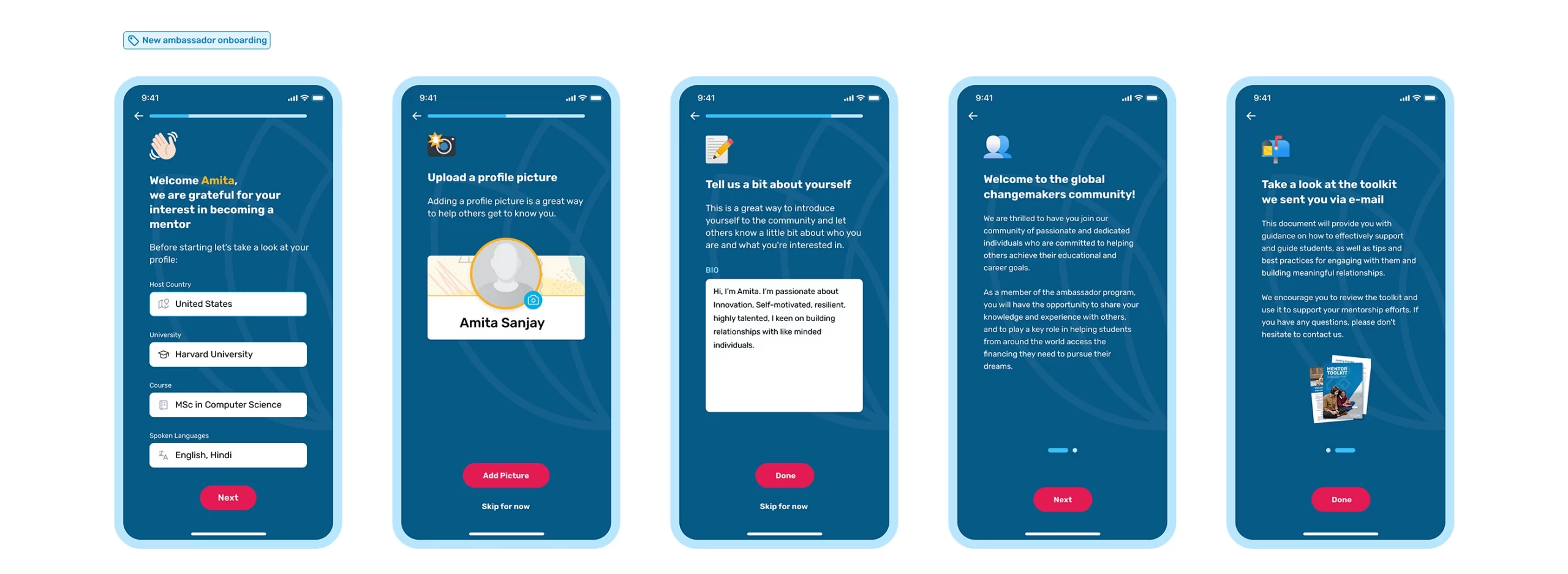
The design of the e-mail journeys is intended to capture the attention of the students and encourage them to consider joining the Prodigy Finance ambassador program. The e-mails use a clean and modern layout, with clear and concise text that highlights the key benefits of being an ambassador, such as the opportunity to help others and to gain valuable experience and skills. The e-mails also include compelling images and graphics that help to illustrate the value of the program and the impact that ambassadors can have on the lives of students. The design is intended to be engaging and persuasive, while also being easy to read and navigate. Overall, the goal of the e-mail journeys is to inspire students to take the next step and sign up to become ambassadors.
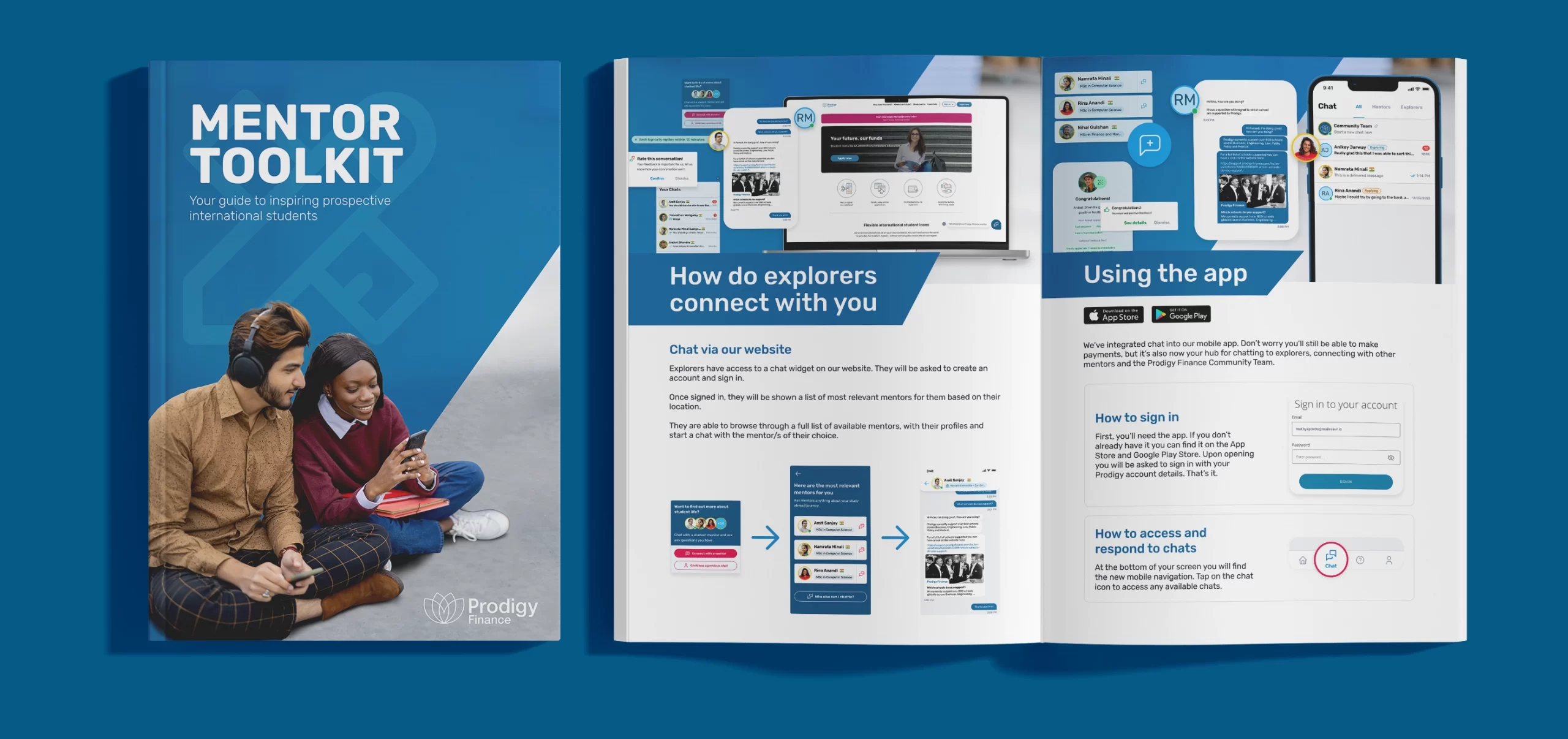
The design of the toolkit document is focused on providing new ambassadors with clear and concise information and guidance that will help them succeed in their mentorship activities. The document is organized into sections that cover key topics such as setting goals, building relationships, and providing effective support and advice. Each section includes practical tips and best practices, as well as examples and case studies that illustrate how other ambassadors have successfully applied these principles. The document also includes instructions and screenshots for using the new chat features added to the repayment app, which is a key tool for ambassadors to communicate with students and coordinate their mentorship efforts. The design of the toolkit is intended to be user-friendly and easy to navigate, with a clear and simple layout and a consistent visual style. Overall, the goal of the toolkit is to provide new ambassadors with the knowledge and resources they need to be successful in their mentorship roles.
The new chat features have been successfully integrated into the Prodigy Finance ecosystem, and has played a key role in helping ambassadors empower the next generation of students on their journey to completing their life-changing Masters programs abroad. Through the app, ambassadors can provide support, guidance, and encouragement to students, and help them overcome challenges and achieve their goals, leading to increased conversions.
The app’s simple and intuitive design, combined with its rich and powerful features, has made it a valuable tool for facilitating communication between ambassadors and students.
The app has also helped to increase engagement and retention among ambassadors, and has contributed to the growth and vitality of the community. Overall, the design of the chat app has successfully achieved its goals, and has provided value to both ambassadors and students alike.